, to see if you have full access to this publication.
Monograph No access
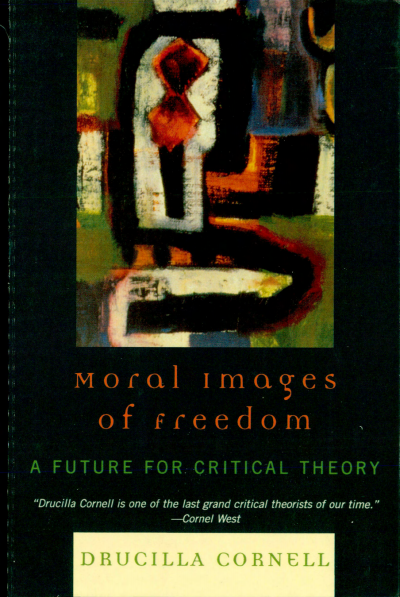
Moral Images of Freedom
A Future for Critical Theory
Authors:
Publisher:
2007
Summary
Moral Images of Freedom resurrects the Kantian project of affirmative political philosophy and traces its oft-forgotten influences found in thinkers such as Martin Heidegger, Ernst Cassirer, Frantz Fanon, and Walter Benjamin. Drucilla Cornell responds to nihilistic claims about the empty purpose of critical theory in a world so utterly captured by violence in all of its worst forms: economic, social, political, and cultural. Cornell instead draws together a sweeping thread of hope in the varied symbolic forms of freedom persistent throughout the work of a broader range of critical theorists and addresses the burning challenge for such work to respond seriously to the need for a decolonization of critical theory itself and a sustained commitment to the possible future of socialism.
Search publication
Bibliographic data
Edition
1/2007
Copyright Year
2007
ISBN-Print
978-0-8476-9793-9
ISBN-Online
978-1-4616-4018-9
Publisher
Rowman & Littlefield, Lanham
Language
English
Pages
181
Product Type
Monograph
Table of contents
ChapterPages
Contents No access
Preface No access
Introduction: The Struggle for Redemptive Imagination No access Pages 1 - 10
Chapter 1 Kantian Beginnings to the Legacy of Critical Theory: The Harmonious Play of Freedom No access Pages 11 - 38
Chapter 2 Dignity in Dasein: Between Thrownness and Hospitality No access Pages 39 - 74
Chapter 3 Symbolic Form as Other: Ethical Humanism and the Vivifying Power of Language No access Pages 75 - 104
Chapter 4 Decolonizing Critical Theory: The Challenge of Black Existentialism No access Pages 105 - 136
Chapter 5 Redemption in the Midst of Phantasmagoria: Dispelling the Fate of Socialism No access Pages 137 - 150
Conclusion: Heeding Piedade's Song—Toward a Transnational Feminist Solidarity No access Pages 151 - 164