, to see if you have full access to this publication.
Monograph No access
Grounding Leadership Ethics in African Diaspora and Election Rights
Authors:
Publisher:
2013
Summary
This book analyzes the leadership ethics dilemma of whether the diaspora ought to vote specifically in their homeland franchise. This quagmire becomes even more complex in the case of Africa, where some diasporas participate in their countries’ elections and others don’t.
It implies and goes beyond the mere question of “why” or what are the reasons behind the fact that members of some countries vote and those of other nations do not. The analysis contained in the book deals with whether it is right or wrong (good or bad; just or unjust; virtuous or immoral, desirable or undesirable) for citizens living overseas to participate in their countries’ suffrages, and for the leaders of African countries to extend the franchise rights to their diaspora.
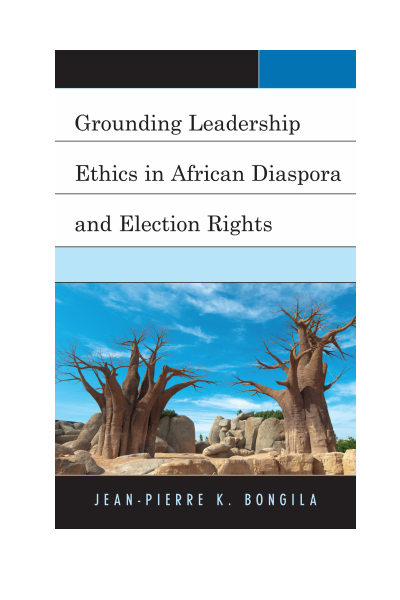
Pedagogically, the book proposes an applied methodology of leadership decision-making based on ethical dilemmas, which instructors and learners of various disciplines, particularly those in leadership ethics, as well as global leaders might find useful. The combined DIRR (Description, Interpretation, Rehearsal and Re-discernment) proposed by Enomoto & Kramer (2007) and the prudent pragmatism by Bluhm & Heineman (2007) correspond to the traditional African “baobab tree” as a physical space of social and political conflict resolutions.
In this book, the “baobab tree”, an ethical arena of public debates, helps to weigh primarily the need for diaspora Africans to get the right to vote, as well as the social, political and economic benefits such a right, if it were granted, would entail for all the parties involved. Drawing from the examples of countries that have championed some form of democratic processes, including expatriate elections, the book brings to the forefront the crucial role of both the leadership of Africa and that of their diaspora in spearheading the continent on the path of sustainable development.
Search publication
Bibliographic data
Edition
1/2013
Copyright Year
2013
ISBN-Print
978-0-7391-6739-7
ISBN-Online
978-0-7391-6740-3
Publisher
Lexington, Lanham
Language
English
Pages
171
Product Type
Monograph
Table of contents
ChapterPages
Contents No access
Preface No access
Acknowledgments No access
Introduction No access Pages 1 - 18
1 Understanding African Diaspora No access Pages 19 - 28
2 Describing the Dilemma No access Pages 29 - 42
3 Diaspora Vote in Duty-Based Ethics No access Pages 43 - 58
4 African Diaspora Vote in Utility Ethics No access Pages 59 - 66
5 African Diaspora Vote in Virtue Ethics No access Pages 67 - 76
6 Considering Ethical Tensions No access Pages 77 - 88
7 Rehearsing Courses of Action No access Pages 89 - 108
8 Rediscerning the Diaspora’s Rights to Elections No access Pages 109 - 126
9 Working with Prudent Pragmatism No access Pages 127 - 142