, to see if you have full access to this publication.
Monograph No access
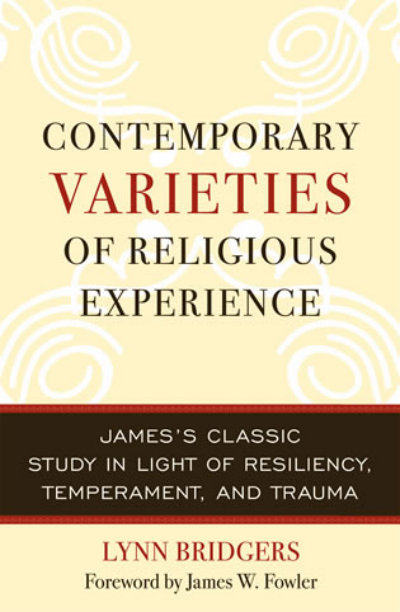
Contemporary Varieties of Religious Experience
James's Classic Study in Light of Resiliency, Temperament, and Trauma
Authors:
Publisher:
2005
Summary
First published in 1902, William James's Varieties of Religious Experience is considered a classic in religious studies and the psychology of religion. But how has James's classic study weathered decades of development in psychology and behavioral sciences? Do the assertions about religious experience in the Varieties still ring true in light of neuro-cognitive and neuro-hormonal research, resiliency studies, studies of temperament, and traumatic studies? By extending William James's own research throughout the century since its publication this volume seeks to answer those questions. In doing so, it revolutionizes our understanding of James's own view of psychology and reveals the extraordinary value of James's perspective for religion, psychology, and spirituality today. In doing so, it offers vital insights for pastoral care and faith development at both the individual and congregational level. From the Introduction by James Fowler: Drawing on the authenticity of her own experience, Bridgers carries us into a remarkably clear and well documented account that traces William James's evolution as a psychologist, philosopher, and a deeply engaged inquirer into the dynamics of spiritual development and transformation... This book has a major contribution to make. Bridgers's study illumines the horizons of contemporary research in the study of religious experience, in all its varieties, and in the context of globalization.
Search publication
Bibliographic data
Edition
1/2005
Copyright Year
2005
ISBN-Print
978-0-7425-4432-1
ISBN-Online
978-0-7425-7515-8
Publisher
Rowman & Littlefield, Lanham
Language
English
Pages
229
Product Type
Monograph
Table of contents
ChapterPages
Contents No access
Foreword No access
Beginning Where We End No access
The Importance of The Varieties of Religious Experience No access
Examining James's Method No access
William James a Century Later No access
From Principles to Varieties No access
Mysticism and Monism No access
The All and the Each No access
Characterizing Religious Experience No access
Benefits of James's Perspective No access
The Religion of Healthy-Mindedness No access
The Sick Soul No access
Rediscovering James's Perspectives No access
Kagan's Temperament Studies and James's Typology No access
Describing the Prophet No access
James's Phenomenological Method-Lectures IV and V No access
Phenomenological Evidence-1902 to 2002 No access
Conclusion No access
Describing the Monk No access
James's Phenomenological Method-Lectures VI, VII, and VIII No access
Phenomenological Evidence-1902 to 2002 No access
Conclusion No access
Describing the Mystic No access
James's Phenomenological Method-Lectures X and XI No access
Phenomenological Evidence-1902 to 2002 No access
Conclusion No access
Consolidating Christian Identity-Prophetic Beginnings No access
The Sick Soul-Augustine of Hippo and the Monastic Tradition No access
Redefining Christian Identity-The Spontaneity of the Spiritual Innovator No access
Implications for Contemporary Religious Communities No access