, to see if you have full access to this publication.
Monograph No access
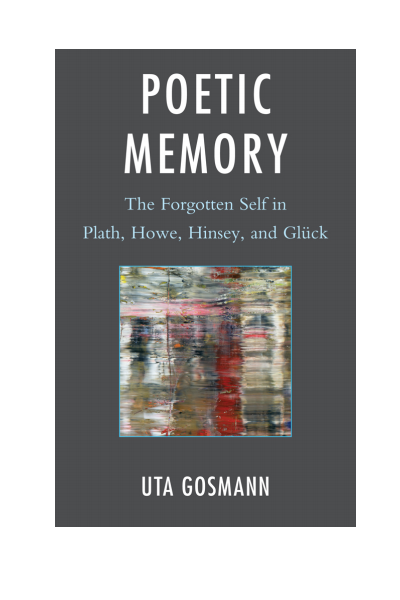
Poetic Memory
The Forgotten Self in Plath, Howe, Hinsey, and Glück
Authors:
Publisher:
2011
Summary
How do poems remember? What kinds of memory do poems register that factual, chronological accounts of the past are oblivious to? What is the self created by such practices of memory? To answer these questions, Uta Gosmann introduces a general theory of 'poetic memory,' a manner of thinking that eschews simple-minded notions of linearity and accuracy in order to uncover the human subject's intricate relationship to a past that it cannot fully know. Gosmann explores poetic memory in the work of Sylvia Plath, Susan Howe, Ellen Hinsey, and Louise GlYck, four contemporary American poets writing in a wide range of styles and discussed here for the first time together. Drawing on psychoanalysis, memory studies, and thinkers from Nietzsche and Benjamin to Halbwachs and Kristeva, Gosmann uses these demanding poets to articulate an alternative, non-empirical model of the self in poetry. Plath, the quintessential 'confessional' poet, faces the precariousness of personal memory and first suffers, but then sardonically embraces the most horrific and vulgar fragments from the storehouse of collective memory. Howe, the experimentalist language poet, becomes the rememberer of marginal or 'nonconformist' figures, whose eccentricities, incoherences, and silences are the very grounds that enable her to inhabit the past. Hinsey, the lesser known of these poets who writes in the European tradition of poetry of witness, creates 'cities of memory' for us to dwell in, allowing us to imagine the past's spatial and temporal texture and its personal significance in fresh ways. GlYck, the 'post-confessional,' expands the memory of the self by enmeshing personal and archetypal memory via the persona of Persphone, a generative confluence which leaves both kinds of memory transformed. When these poets look at the past, they perceive its flawed representations, its lack of certainty, its margins and gaps, its traces in space, its deep marks in the psyche. They share an intuitive certainty of self as being other, and they look in different places to find what was split off, forgotten, and psychically lost. They use words, which are complex bits of memory, to push against encrusted structures or apparent boundaries of the mind and seek to represent more fluid states of consciousness. Poetic language—-riven with metaphor, unrestricted by familiar forms of logic—-is especially conducive to the work of poetic memory. Poetic memory embraces a vision of the self as malleable and mysterious, characterized by a radical otherness, and shaped by unconscious forces, while it remains open for continual imaginative reinvention. Through the practice of poetic memory, to speak with Plotinus, the soul 'is and becomes what it remembers.'
Search publication
Bibliographic data
Edition
1/2011
Copyright Year
2011
ISBN-Print
978-1-61147-036-9
ISBN-Online
978-1-61147-037-6
Publisher
Lexington, Lanham
Language
English
Pages
243
Product Type
Monograph
Table of contents
ChapterPages
Contents No access
Acknowledgments No access
Abbreviations No access
Introduction No access Pages 1 - 22
Chapter One: Sylvia Plath No access Pages 23 - 70
Chapter Two: Susan Howe’s Nonconformist Memorials No access Pages 71 - 130
Chapter Three: Spacing the Past in Ellen Hinsey’s Cities of Memory No access Pages 131 - 178
Chapter Four: Psychoanalyzing Persephone No access Pages 179 - 212