, to see if you have full access to this publication.
Edited Book No access
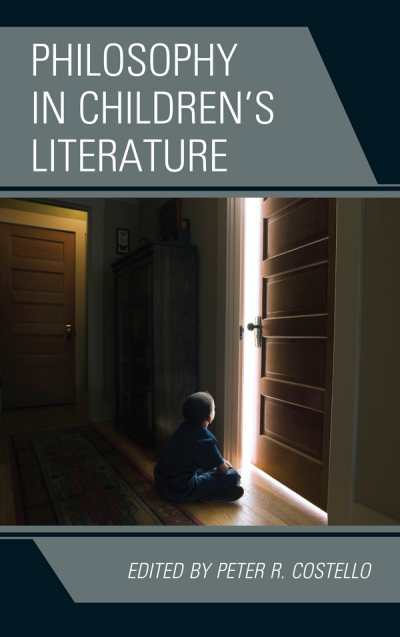
Philosophy in Children's Literature
Editors:
Publisher:
2011
Summary
This book allows philosophers, literary theorists, and education specialists to come together to offer a series of readings on works of children’s literature. Each of their readings is focused on pairing a particular, popular picture book or a chapter book with philosophical texts or themes.
The book has three sections—the first, on picturebooks; the second, on chapter books; and the third, on two sets of paired readings of two very popular picturebooks. By means of its three sections, the book sets forth as its goal to show how philosophy can be helpful in reappraising books aimed at children from early childhood on. Particularly in the third section, the book emphasizes how philosophy can help to multiply the type of interpretative stances that are possible when readers listen again to what they thought they knew so well.
The kinds of questions this book raises are the following: How are children’s books already anticipating or articulating philosophical problems and discussions? How does children’s literature work by means of philosophical puzzles or language games? What do children’s books reveal about the existential situation the child reader faces?
In posing and answering these kinds of questions, the readings within the book thus intersect with recent, developing scholarship in children’s literature studies as well as in the psychology and philosophy of childhood.
Keywords
Search publication
Bibliographic data
Edition
1/2011
Copyright Year
2011
ISBN-Print
978-0-7391-6823-3
ISBN-Online
978-0-7391-6824-0
Publisher
Lexington, Lanham
Language
English
Pages
326
Product Type
Edited Book
Table of contents
ChapterPages
Contents No access
Foreword No access
Introduction No access
Chapter 01. Heidegger, Winnicott, and The Velveteen Rabbit No access Pages 1 - 20
Chapter 02. Slave Morality in The Rainbow Fish No access Pages 21 - 40
Chapter 03. Absolutely Positively Feeling that Way and More No access Pages 41 - 62
Chapter 04. Are You My Mother? Finding the Self in (M)others No access Pages 63 - 82
Chapter 05. Horton Hears Badiou!: Ethics and an Understanding of Dr. Seuss’s Horton Hears a Who! No access Pages 83 - 100
Chapter 06. Mapping Chris Van Allsburg’sThe Mysteries of Harris Burdick No access Pages 101 - 118