, to see if you have full access to this publication.
Edited Book No access
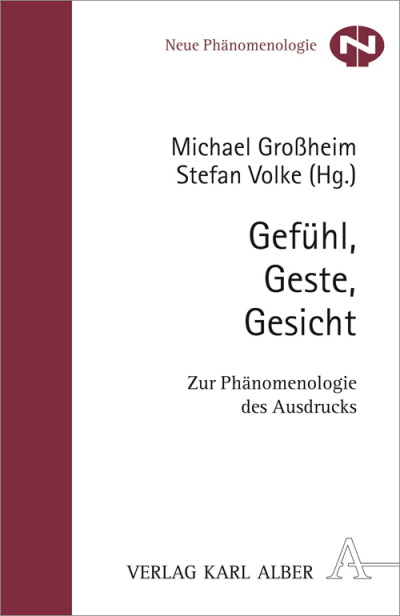
Gefühl, Geste, Gesicht
Zur Phänomenologie des Ausdrucks- Editors:
- |
- Series:
- Neue Phänomenologie, Volume 13
- Publisher:
- 2014
Keywords
Search publication
Bibliographic data
- Copyright Year
- 2014
- ISBN-Print
- 978-3-495-48412-8
- ISBN-Online
- 978-3-495-86006-9
- Publisher
- Karl Alber, Baden-Baden
- Series
- Neue Phänomenologie
- Volume
- 13
- Language
- German
- Pages
- 292
- Product Type
- Edited Book
Table of contents
ChapterPages
- Titelei/Inhaltsverzeichnis No access Pages 1 - 6
- Inhalt No access Pages 7 - 8
- Authors: |
- Nachrichten aus einer fremden Welt No accessAuthors: |
- Das vielsagende Lächeln der Mona Lisa No accessAuthors: |
- Die zeichenlose Botschaft No access Pages 18 - 29Authors:
- Authors:
- I. Die Universalitätsthese No accessAuthors:
- Authors:
- II.1 Basisemotionen No accessAuthors:
- II.2 Funktionen des Ausdrucks No accessAuthors:
- Authors:
- III.1 Ekmans Interkulturelle Beurteilungsstudien No accessAuthors:
- III.2 Beobachtungsstudien zur Ontogenese des Ausdrucks No accessAuthors:
- Authors:
- IV.1 Die neuro-kulturelle Theorie der Gefühle No accessAuthors:
- IV.2 Die verhaltensökologische Theorie des Ausdrucks No accessAuthors:
- IV.3 Fazit No accessAuthors:
- Authors:
- I. Einführung No accessAuthors:
- Authors:
- Authors:
- Motivationale Funktionen No accessAuthors:
- Kommunikative Funktionen No accessAuthors:
- Authors:
- Emotionen: Prozesse und Komponenten No accessAuthors:
- Authors:
- Mimische Muskulatur No accessAuthors:
- Systematische Erfassung der Mimik No accessAuthors:
- Authors:
- Auslöser mimischen Verhaltens No accessAuthors:
- Mimische Aktivität beim Betrachten von Filmen No accessAuthors:
- Mimische und subjektive Reaktionen auf Geschmacksreize No accessAuthors:
- Embodying Emotion No accessAuthors:
- »Emotionale Überblendungen« (»Emotional blends«) No accessAuthors:
- Wahrnehmung und Beurteilung des Lächelns No accessAuthors:
- Gibt es emotions-spezifische prototypische Affekt Programme? No accessAuthors:
- Authors:
- IV.1 Charakteristika mimischen Verhaltens bei psychiatrischen Störungen No accessAuthors:
- Authors:
- Beziehungen zwischen Stimulus, Emotion und Ausdruck No accessAuthors:
- Authors:
- Multiple Funktionen mimischen Verhaltens No accessAuthors:
- Flexibilität der Interaktion von Organismus und Umgebung No accessAuthors:
- Authors:
- Einleitende Bemerkungen No accessAuthors:
- Authors:
- I.1 Indiz oder Erlebnis? No accessAuthors:
- I.2 Vergegenwärtigung und Versinnlichung No accessAuthors:
- I.3 Ein behavioristisch orientierter Ausdrucksbegriff No accessAuthors:
- Authors:
- II.1 Eine innere Beziehung zwischen Sprache und Welt No accessAuthors:
- II.2 Sprache als Medium No accessAuthors:
- Authors:
- I. Der Sinn von ›selbst‹ No accessAuthors:
- II. Sich-zu-sich-Verhalten No accessAuthors:
- Linie und Farbe – zwei Versuche No access Pages 133 - 138Authors:
- Authors:
- I. Einleitung No accessAuthors:
- II. Geschlechtsspezifische Wirkungsweisen No accessAuthors:
- III. Alter und Stimme No accessAuthors:
- IV. Emotionaler Ausdruck durch Stimme und Sprechweise No accessAuthors:
- V. Stimme und Persönlichkeit No accessAuthors:
- VI. Synchronstimmen No accessAuthors:
- VII. Bildhafte Vorstellungen von Radiomoderatoren No accessAuthors:
- VIII. Das vegetative Nervensystem No accessAuthors:
- IX. Einstellung und Ironie No accessAuthors:
- X. Conclusio No accessAuthors:
- Authors:
- I. Einleitung No accessAuthors:
- 2. Heinz Werners Sprachphysiognomik No accessAuthors:
- III. Die relative Arbitrarität des Zeichens No accessAuthors:
- IV. Gesichter als Situationen No accessAuthors:
- V. Karl Bühlers Konzept des Klanggesichts No accessAuthors:
- VI. Physiognomische Artikulation No accessAuthors:
- VII. Epilog No accessAuthors:
- Authors:
- I. Musikalischer Ausdruck ist ästhetischer Ausdruck und mehr No accessAuthors:
- Authors:
- II.1 Das Kontinuum des musikalischen Ausdrucks No accessAuthors:
- Authors:
- II.2.1 Zeichenqualitäten No accessAuthors:
- II.2.2. Anmutungsqualitäten No accessAuthors:
- II.2.3. Spezifisch tonlich ästhetische Anmutungen No accessAuthors:
- II.2.4. Anmutungen mit semantischen Beiklängen No accessAuthors:
- Authors:
- I. Luft sortieren und Atmosphären erzeugen No accessAuthors:
- II. Musik als Bewegung No accessAuthors:
- III. Akustische Gebärdefiguren No accessAuthors:
- IV. Typen des Kraftgeschehens No accessAuthors:
- V. Probenarbeit und solidarische Einleibung No accessAuthors:
- VI. Schluss No accessAuthors:
- Authors:
- Authors:
- I.1 »Tanz verstehen« No accessAuthors:
- I.2 Die Idee einer »anderen Intelligenz« No accessAuthors:
- I.3 Phänomenologie des Tanzes No accessAuthors:
- Authors:
- II.1 Edmund Husserl: »Der Mensch ist in seinen Sinnesartikulationen Mensch!« No accessAuthors:
- II.2 Maurice Merleau-Ponty: Die Künste als Formen leiblichen Denkens No accessAuthors:
- II.3 Hermann Schmitz: Tanz als eine Praxis leiblicher Intelligenz No accessAuthors:
- III. Schlussbemerkung No accessAuthors:
- Authors:
- I. Raum-Sichten No accessAuthors:
- II. Raum und Bewegung No accessAuthors:
- III. Bewegungsmotivationen No accessAuthors:
- Authors:
- IV.1 Dimension des Raums (Richtungsorientierung) No accessAuthors:
- IV.2 Raumgefüge (Zustandssorientierung) No accessAuthors:
- IV.3 Raumöffnungen (Mobilitätsorientierung) No accessAuthors:
- IV.4 Raumverbund (Anschlussorientierung) No accessAuthors:
- V. Orientierte phänomenale Räume No accessAuthors:
- Die Autoren No access Pages 285 - 292