, to see if you have full access to this publication.
Monograph No access
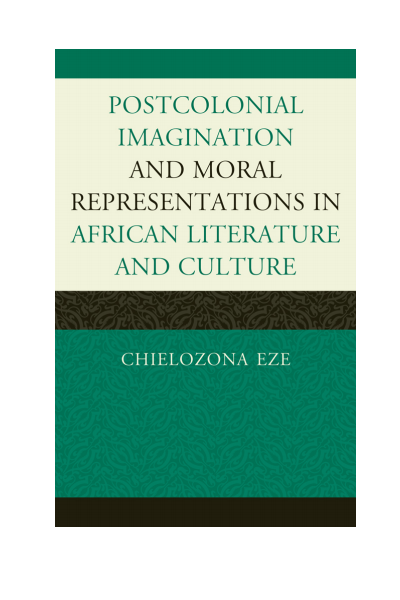
Postcolonial Imaginations and Moral Representations in African Literature and Culture
Authors:
Publisher:
2011
Summary
The postcolonial African culture, as it is discoursed in the academia, is largely influenced by Africa’s response to colonialism. To the degree that it is a response, it is to considerably reactive, and lacks forceful moral incentives for social critical consciousness and nation-building. Quite on the contrary, it allows especially African political leaders to luxuriate in the delusions of moral rectitude, imploring, at will, the evil of imperialism as a buffer to their disregard of their people. This book acknowledges the social and psychological devastations of colonialism on the African world. It, however, argues that the totality of African intellectual response to colonialism and Western imperialism is equally, if not more, damaging to the African world. In what ways does the average African leader, indeed, the average African, judge and respond to his world? How does he conceive of his responsibility towards his community and society?
The most obvious impact of African response to colonialism is the implicit search for a pristine, innocent paradigms in, for instance, literary, philosophical, social, political and gender studies. This search has its own moral implication in the sense that it makes the taking of responsibility on individual and social level highly difficult. Focusing on the moral impact of responses to colonialism in Africa and the African Diaspora, this book analyzes the various manifestations of delusions of moral innocence that has held the African leadership from the onerous task of bearing responsibility for their countries; it argues that one of the ways to recast the African leaders’ responsibility towards Africa is to let go, on the one hand, the gaze of the West, and on the other, of the search for the innocent African experience and cultures.
Relying on the insights of thinkers such as Frantz Fanon, Wole Soyinka, Kwame Anthony Appiah, Achille Mbembe and Wolgang Welsch, this book suggests new approach to interpreting African experiences. It discusses select African works of fiction as a paradigm for new interpretations of African experiences.
Keywords
Search publication
Bibliographic data
Edition
1/2011
Copyright Year
2011
ISBN-Print
978-0-7391-4506-7
ISBN-Online
978-0-7391-4508-1
Publisher
Lexington, Lanham
Language
English
Pages
137
Product Type
Monograph
Table of contents
ChapterPages
Contents No access
Acknowledgments No access
Introduction: Postcolonial Imagination and Moral Representations—Africa in Discourse and Culture No access
Chapter One: Postcolonial States of Injury and Moral Imaginations No access Pages 1 - 14
Chapter Two: The Moral Reinvention of Africa No access Pages 15 - 36
Chapter Three: Things Fall Apart and the Invention of African Culture No access Pages 37 - 54
Chapter Four: The Pitfalls of African Feminism No access Pages 55 - 70
Chapter Five: Robert Mugabe and the Symbolic Power of History No access Pages 71 - 84
Chapter Six: Frantz Fanon and the Search for New Discourse Paradigms No access Pages 85 - 100
Chapter Seven: Wole Soyinka and the Moral Foundations of Community No access Pages 101 - 114
Chapter Eight: Literature and the Task of Increasing the Sum Total of Humanity No access Pages 115 - 126