, to see if you have full access to this publication.
Edited Book No access
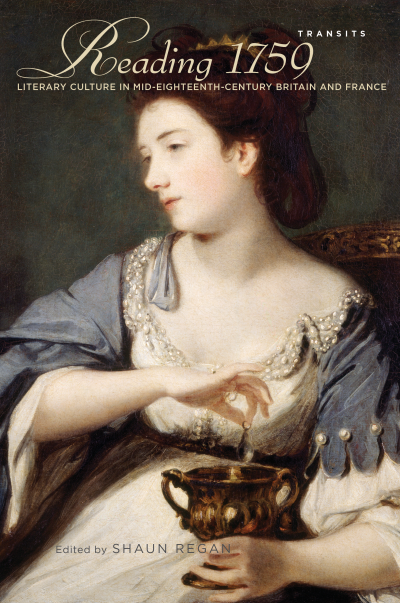
Reading 1759
Literary Culture in Mid-Eighteenth-Century Britain and France
Editors:
Publisher:
2012
Summary
Reading 1759 investigates the literary culture of a remarkable year in British and French history, writing, and ideas. Familiar to many as the British “year of victories” during the Seven Years’ War, 1759 was also an important year in the histories of fiction, philosophy, ethics, and aesthetics. Reading 1759 is the first book to examine together the range of works written and published during this crucial year. Offering broad coverage of the year’s work in writing, these essays examine key works by Johnson, Voltaire, Sterne, Adam Smith, Edward Young, Sarah Fielding, and Christopher Smart, along with such group projects as the Encyclopédie and the literary review journals of the mid-eighteenth century. Organized around a cluster of key topics, the volume reflects the concerns most important to writers themselves in 1759. This was a year of the new and the modern, as writers addressed current issues of empire and ethical conduct, forged new forms of creative expression, and grappled with the nature of originality itself. Texts written and published in 1759 confronted the history of Western colonialism, the problem of prostitution in a civilized society, and the limitations of linguistic expression. Philosophical issues were also important in 1759, not least the thorny question of causation; while, in France, state censorship challenged the Encyclopédie, the central Enlightenment project. Taking into its purview such texts and intellectual developments, Reading 1759 puts the literary culture of this singular, and singularly important, year on the scholarly map. In the process, the volume also provides a self-reflective contribution to the growing body of “annualized” studies that focus on the literary output of specific years.
Keywords
Search publication
Bibliographic data
Edition
1/2012
Copyright Year
2012
ISBN-Print
978-1-61148-478-6
ISBN-Online
978-1-61148-479-3
Publisher
Lexington, Lanham
Language
English
Pages
256
Product Type
Edited Book
Table of contents
ChapterPages
CONTENTS No access
ACKNOWLEDGEMENTS No access
INTRODUCTION No access Pages 1 - 18
Chapter 1. “WHAT MANKIND HAS LOST AND GAINED”: JOHNSON, RASSELAS, AND COLONIALISM No access
Chapter 2. VOLTAIRE’S CANDIDE AS A GLOBAL TEXT: WAR, SLAVERY, AND LEADERSHIP No access
Chapter 3. ADAM SMITH’S THE THEORY OF MORAL SENTIMENTS IN 1759: SPECTATORSHIP, DUTY, AND SOCIAL IMPROVEMENT No access
Chapter 4. “ON THE SOFT BEDS OF LUXURY MOST KINGDOMS HAVE EXPIRED”: 1759 AND THE LIVES OF PROSTITUTES No access
Chapter 5. YOUNG, GOLDSMITH, JOHNSON, AND THE IDEA OF THE AUTHOR IN 1759 No access
Chapter 6. TOWARDS A NEW LANGUAGE: SUBLIME AESTHETICS IN SMART’S JUBILATE AGNO No access
Chapter 7. THE ENCYCLOPÉDIE IN 1759: CRISIS AND CONTINUATION No access
Chapter 8. LOST CAUSE: HUME, CAUSATION, AND RASSELAS No access
Chapter 9. ECCENTRICITY, ORIGINALITY, AND THE NOVEL: TRISTRAM SHANDY, VOLUMES 1 AND 2 No access
Chapter 10. SHAKESPEARE’S “PROPRIETY” AND THE MID-EIGHTEENTH-CENTURY NOVEL: SARAH FIELDING’S THE HISTORY OF THE COUNTESS OF DELLWYN No access
Chapter 11. WRITERS, REVIEWERS, AND THE CULTURE OF READING No access