, to see if you have full access to this publication.
Edited Book No access
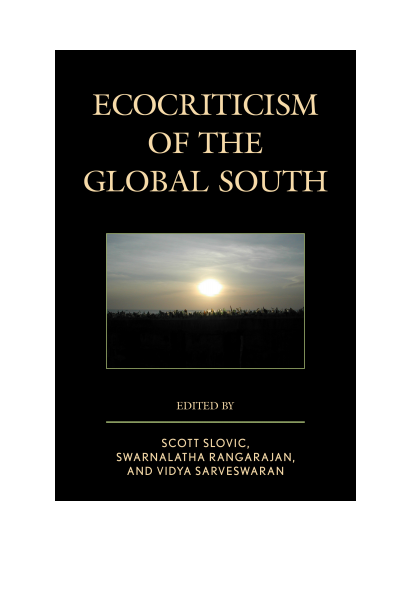
Ecocriticism of the Global South
Editors:
| |
Publisher:
2015
Summary
The vast majority of existing ecocritical studies, even those which espouse the “postcolonial ecocritical” perspective, operate within a first-world sensibility, speaking on behalf of subalternized human communities and degraded landscapes without actually eliciting the voices of the impacted communities. Ecocriticism of the Global South seeks to allow scholars from (or intimately familiar with) underrepresented regions to “write back” to the world’s centers of political and military and economic power, expressing views of the intersections of nature and culture from the perspective of developing countries. This approach highlights what activist and writer Vandana Shiva has described as the relationship between “ecology and the politics of survival,” showing both commonalities and local idiosyncrasies by juxtaposing such countries as China and Northern Ireland, New Zealand and Cameroon. Much like Ecoambiguity, Community, and Development, this new book is devoted to representing diverse and innovative ecocritical voices from throughout the world, particularly from developing nations. The two volumes complement each other by pointing out the need for further cultivation of the environmental humanities in regions of the world that are, essentially, the front line of the human struggle to invent sustainable and just civilizations on an imperiled planet.
Keywords
Search publication
Bibliographic data
Edition
1/2015
Copyright Year
2015
ISBN-Print
978-0-7391-8910-8
ISBN-Online
978-0-7391-8911-5
Publisher
Lexington, Lanham
Language
English
Pages
272
Product Type
Edited Book
Table of contents
ChapterPages
Contents No access
Acknowledgements No access
Introduction No access Pages 1 - 10
1 The Environmentalism of The Hungry Tide No access Pages 11 - 34
2 “The Land Was Wounded”: War Ecologies, Commodity Frontiers, and Sri Lankan Literature No access Pages 35 - 54
3 Scenes from the Global South in China: Zheng Xiaoqiong’s Poetic Agency for Labor and Environmental Justice No access Pages 55 - 76
4 Literary Isomorphism and the Malayan and Caribbean Archipelagos No access Pages 77 - 92
5 Wai tangi, Waters of Grief, wai ora, Waters of Life: Rivers, Reports, and Reconciliation in Aotearoa New Zealand No access Pages 93 - 108
6 Fish, Coconuts, and Ocean People: Nuclear Violations of Oceania’s “Earthly Design” No access Pages 109 - 122
7 Intimate Kinships: Who Speaks for Nature and Who Listens When Nature Speaks for Herself? No access Pages 123 - 134
8 Redefining Modernity in Latin American Fiction: Toward Ecological Consciousness in La loca de Gandoca and Lo que soñó Sebastian No access Pages 135 - 150
9 Northern Ireland ↔ Global South No access Pages 151 - 160
10 “Decline and Fall”: Empire, Land, and the Twentieth-Century Irish “Big House” Novel No access Pages 161 - 180
11 Landscape and Animal Tragedy in Nsahlai Nsambu Athanasius’s The Buffalo Rider: Ecocritical Perspectives, the Cameroon Experiment No access Pages 181 - 196
12 Ecocriticism beyond Animist Intimations in Things Fall Apart No access Pages 197 - 212
13 Ecocriticism, Globalized Cities, and African Narrative, with a Focus on K. Sello Duiker’s Thirteen Cents No access Pages 213 - 232
14 Environmental and Cultural Entropy in Bozorg Alavi’s “Gilemard” No access Pages 233 - 248
15 Environmental Consciousness in Contemporary Pakistani Fiction No access Pages 249 - 262