, to see if you have full access to this publication.
Monograph No access
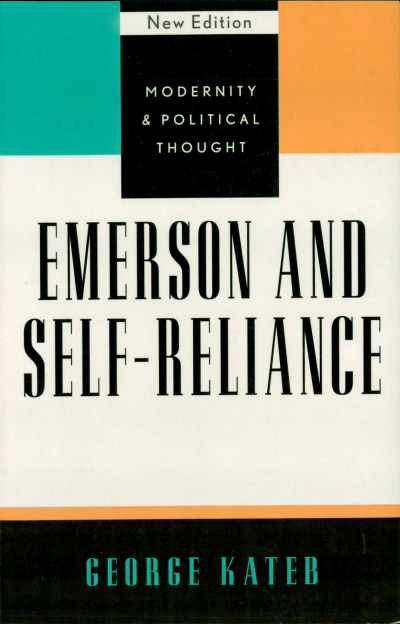
Emerson and Self-Reliance
Authors:
Publisher:
2002
Summary
Ralph Waldo Emerson was a great moral philosopher. One of his principle contributions is the theory of self-reliance, a view of democratic individuality. During much of his life, Emerson was considered a radical thinker, and his opposition to established religious opinion was scandalous. Emerson's deep commitment to individualism was at the root of his critique, and his articulation of individualism was constant, whether aimed against the group mind or against institutional constrictions. 'Nietzsche was Emerson's best reader,' and George Kateb provides an accessible reading of Emerson that is friendly to the interests of Nietzsche and to later Nietzscheans such as Weber, Heidegger, Arendt, and Foucault.
Search publication
Bibliographic data
Edition
1/2002
Copyright Year
2002
ISBN-Print
978-0-7425-2145-2
ISBN-Online
978-0-7425-7808-1
Publisher
Rowman & Littlefield, Lanham
Language
English
Pages
2
Product Type
Monograph
Table of contents
ChapterPages
Contents No access
Series Editor's Introduction Morton Schoolman No access
Preface to the New Edition No access
Acknowledgments No access
Key to Citations No access
Preface No access
1. Self-Relianceand the Life of the Mind No access Pages 1 - 36
2. Redeeming the Frustrations of Experience No access Pages 37 - 60
3. The Question of Religiousness No access Pages 61 - 95
4. Friendship and Love No access Pages 96 - 133
5. Individuality and Identity No access Pages 134 - 172
6. Self-Reliance, Politics, and Society No access Pages 173 - 196