, to see if you have full access to this publication.
Monograph No access
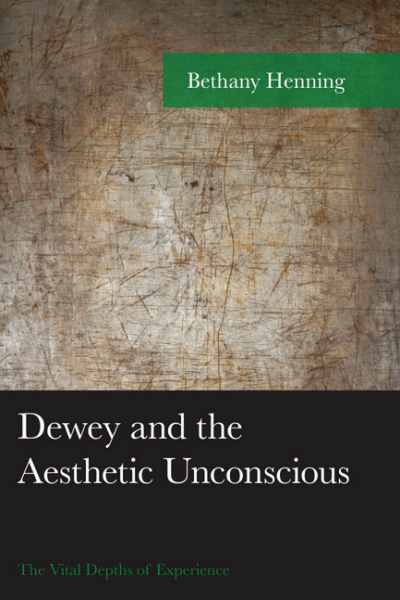
Dewey and the Aesthetic Unconscious
The Vital Depths of Experience
Authors:
Publisher:
2022
Summary
John Dewey was the most celebrated and publicly engaged American philosopher in the twentieth century. His naturalistic theory of “experience” generated new approaches to education and democracy and re-grounded philosophy’s search for truth in the needs of life as it is shared and lived. However, interpretations of Dewey after the linguistic turn have either obscured or rejected the considerable role that he gives to the non-discursive dimension of experience. In Dewey and the Aesthetic Unconscious: The Vital Depths of Experience, Bethany Henning argues that much classical American philosophy implicitly recognizes an unconscious dimension of mind that is distinct from Freud’s theory. Although the unconscious that emerges within American thought has never been treated systematically, it found its fullest expression in Dewey’s work, particularly in his theory of aesthetic experience. This dimension of mind illuminates the continuity between nature and culture, and it provides us with an account of why artwork is often successful at communicating meanings from the ecological and intimate dimensions of life, where discourse often fails. If the relationship between the human and the organic world has emerged as the definitive question of twenty-first century life, then the aesthetic unconscious stands as a resource for our ecological and intimate well-being.
Search publication
Bibliographic data
Edition
1/2022
Copyright Year
2022
ISBN-Print
978-1-7936-2021-7
ISBN-Online
978-1-7936-2022-4
Publisher
Lexington, Lanham
Language
English
Pages
172
Product Type
Monograph
Table of contents
ChapterPages
Contents No access
Acknowledgments No access
Introduction No access Pages 1 - 12
The Aesthetic Confrontation with Nature No access Pages 13 - 34
The American Unconscious No access Pages 35 - 62
The Feel of the Flesh, the Emergence of Mind No access Pages 63 - 96
Eros and the Primacy of the Aesthetic No access Pages 97 - 122
Uncomfortable Art and American Trauma No access Pages 123 - 144
From the Organic Plentitude of Being No access Pages 145 - 160