, to see if you have full access to this publication.
Monograph No access
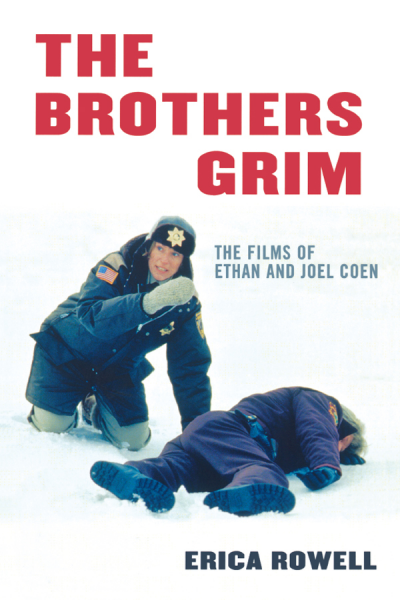
The Brothers Grim
The Films of Ethan and Joel Coen
Authors:
Publisher:
2007
Summary
In 1984 Joel and Ethan Coen burst onto the art-house film scene with their neo-noir Blood Simple and ever since then they have sharpened the cutting edge of independent film. Blending black humor and violence with unconventional narrative twists, their acclaimed movies evoke highly charged worlds of passion, absurdity, nightmare realms, and petty human failures, all the while revealing the filmmakers' penchant for visual jokes and bravura technical strokes. Their central characters may be blind to reality and individual flaws, but their illusions, dreams, fears, and desires map the boundaries of their worlds—worlds made stunningly memorable by the Coens.
In The Brothers Grim: The Films of Ethan and Joel Coen, Erica Rowell unmasks the filmmakers as prankster mythmakers exploiting and subverting universal storytelling modes to further what seems to be their artistic agenda: to elicit laughs. Often employing satire and allegory, the Coens' movies hold a mirror up to American society, allowing viewers to both chuckle and gasp at its absurdities, hypocrisies, and foibles. From business partnerships (Blood Simple, The Ladykillers) to marriage (Intolerable Cruelty) to friendship and ethics (Miller's Crossing), the breakdowns of relationships are a steady focus in their work. Often the Coens' satires put broken social institutions in their cinematic crosshairs, exposing cracks in ineffective penal systems (Raising Arizona; O Brother, Where Art Thou?), unjust justice systems (The Man Who Wasn't There), a crooked corporate America (The Hudsucker Proxy), unnecessary wars (The Big Lebowski), a tyrannical Hollywood (Barton Fink), and the unbridled, fatuous pursuit of the American Dream (Fargo). While audiences may be excused for missing the duo's social commentary, the depth and breadth of the brothers' films bespeak an intelligence and cultural acuity that is rich, highly topical, and hard to pigeonhole.
Search publication
Bibliographic data
Edition
1/2007
Copyright Year
2007
ISBN-Print
978-0-8108-5850-3
ISBN-Online
978-1-4616-6408-6
Publisher
Rowman & Littlefield, Lanham
Language
English
Pages
379
Product Type
Monograph
Table of contents
ChapterPages
Table of Contents No access
Acknowledgments No access
Introduction No access
1: Blood Simple: A Photo No access Pages 1 - 36
2: Raising Arizona: A Baby No access Pages 37 - 68
3: Miller's Crossing: A Hat No access Pages 69 - 102
4: Barton Fink: A Head No access Pages 103 - 138
5: The Hudsucker Proxy: A Circle No access Pages 139 - 170
6: Fargo: Snow No access Pages 171 - 206
7: The Big Lebowski: A Bowling Ball No access Pages 207 - 242
8: O Brother, where Art Thou?: A Song No access Pages 243 - 276
9: The Man who wasn't there: A Flying Saucer No access Pages 277 - 308
10: Intolerable Cruelty and the Ladykillers: Spoils or Oh Brothers, where Art Thou? No access Pages 309 - 344
Appendix: Winks and Nods No access Pages 345 - 352
Bibliography No access Pages 353 - 360
Filmography No access Pages 361 - 374
Index No access Pages 375 - 378
About the Author No access Pages 379 - 379
Similar publications
from the topics "Medienwissenschaft, Kommunikationsforschung"