, to see if you have full access to this publication.
Edited Book No access
The Vienna Summit and Its Importance in International History
Editors:
| |
Publisher:
2013
Summary
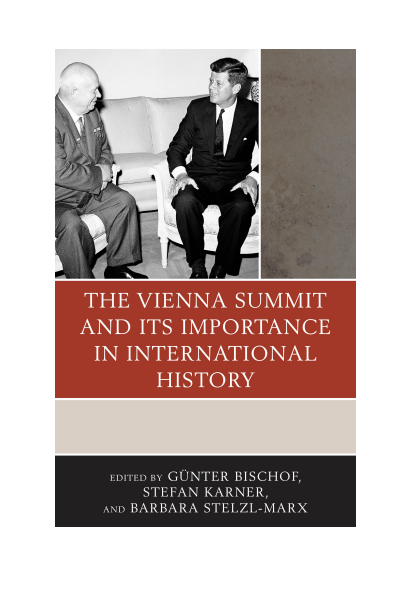
At the beginning of June 1961, the tensions of the Cold War were supposed to abate as both sides sought a resolution. The two most important men in the world, John F. Kennedy and Nikita Khrushchev, met for a summit in Vienna. Yet the high hopes were disappointed. Within months the Cold War had become very hot: Khrushchev built the Berlin Wall and a year later he sent missiles to Cuba to threaten the United States directly.
Despite the fact that the Vienna Summit yielded barely any tangible results, it did lead to some very important developments. The superpowers came to see for the first time that there was only one way to escape from the atomic hell of their respective arsenals: dialogue. The "peace through fear" and the "hotline" between Washington and Moscow prevented an atomic confrontation. Austria successfully demonstrated its new role as neutral state and host when Vienna became a meeting place in the Cold War. In The Vienna Summit and Its Importance in International History international experts use new Russian and Western sources to analyze what really happened during this critical time and why the parties had a close shave with catastrophe.
Keywords
Search publication
Bibliographic data
Edition
1/2013
Copyright Year
2013
ISBN-Print
978-0-7391-8556-8
ISBN-Online
978-0-7391-8557-5
Publisher
Lexington, Lanham
Language
English
Pages
534
Product Type
Edited Book
Table of contents
ChapterPages
Contents No access
I: Introduction and Historical Context No access Pages 1 - 54
II: Contextualizing the Vienna Summit No access Pages 55 - 166