, to see if you have full access to this publication.
Edited Book No access
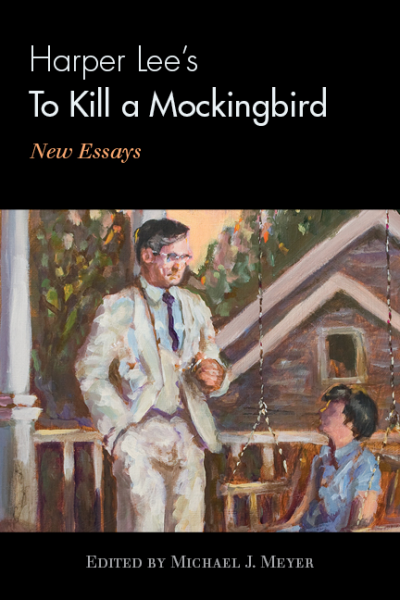
Harper Lee's to Kill a Mockingbird
New Essays
Editors:
Publisher:
2010
Summary
In 1960, To Kill a Mockingbird was published to critical acclaim. To commemorate To Kill a Mockingbird's 50th anniversary, Michael J. Meyer has assembled a collection of new essays that celebrate this enduring work of American literature. These essays approach the novel from educational, legal, social, and thematic perspectives.
Harper Lee's only novel won the Pulitzer Prize and was transformed into a beloved film starring Gregory Peck as Atticus Finch. An American classic that frequently appears in middle school and high school curriculums, the novel has been subjected to criticism for its subject matter and language. Still relevant and meaningful, To Kill a Mockingbird has nonetheless been under-appreciated by many critics. There are few books that address Lee's novel's contribution to the American canon and still fewer that offer insights that can be used by teachers and by students.
These essays suggest that author Harper Lee deserves more credit for skillfully shaping a masterpiece that not only addresses the problems of the 1930s but also helps its readers see the problems and prejudices the world faces today. Intended for high school and undergraduate usage, as well as for teachers planning to use To Kill a Mockingbird in their classrooms, this collection will be a valuable resource for all teachers of American literature.
Search publication
Bibliographic data
Edition
1/2010
Copyright Year
2010
ISBN-Print
978-0-8108-7722-1
ISBN-Online
978-0-8108-7723-8
Publisher
Rowman & Littlefield, Lanham
Language
English
Pages
266
Product Type
Edited Book
Table of contents
ChapterPages
Contents No access
Foreword No access
Preface No access
Acknowledgments No access
Editor’s Note No access
CHAPTER 01. What Teachers (Don’t) Say: A Grounded Theory Approach to Online Discussions of To Kill a Mockingbird No access
CHAPTER 02. Multimedia Mockingbird: Teaching Harper Lee’s Novel Using Technology No access
CHAPTER 03. A Soundtrack Approach to Teaching To Kill a Mockingbird No access
CHAPTER 04. The Courthouse Ring: Atticus Finch and the Limits of Southern Liberalism No access
CHAPTER 05. To Kill a Mockingbird: Fifty Years of Influence on the Legal Profession No access
CHAPTER 06. Bending the Law: The Search for Justice and Moral Purpose No access
CHAPTER 07. Unlikely Duos: Paired Characters in To Kill a Mockingbird No access
CHAPTER 08. On Reading To Kill a Mockingbird: Fifty Years Later No access
CHAPTER 09. Spooks, Masks, Haints, and Things That Go Bump in the Night: Fear and Halloween Imagery in To Kill a Mockingbird No access
CHAPTER 10. “A Rigid and Time-Honored Code”: Sport and Identity in To Kill a Mockingbird No access
CHAPTER 11. Symbolic Justice: Reading Symbolism in Harper Lee’s To Kill a Mockingbird No access
CHAPTER 12. Walking in Another’s Skin: Failure of Empathy in To Kill a Mockingbird No access
CHAPTER 13. “Enable Us to Look Back”: Performance and Disability in To Kill a Mockingbird No access
CHAPTER 14 “Just One Kind of Folks:” The Normalizing Power of Disability in To Kill a Mockingbird No access
CHAPTER 15. To Kill a Mockingbird: Perceptions of “the Other” No access
Related Readingsand Publications No access Pages 249 - 254
Index No access Pages 255 - 260
About the Editor and Contributors No access Pages 261 - 266