, to see if you have full access to this publication.
Monograph No access
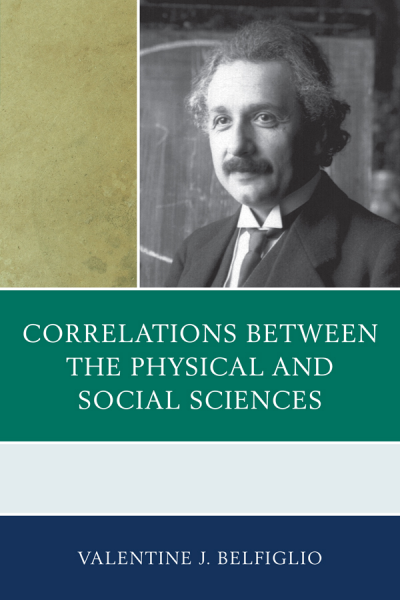
Correlations Between the Physical and Social Sciences
Authors:
Publisher:
2011
Summary
This monograph presents four case studies that make correlations between the physical and social sciences. The traditional, empirical, and postmodernist approaches to the study of the social sciences have left many scholars dissatisfied with the results of these methods. The empiricists were on the right track, but they did not go far enough. It is important to anchor statistical data to mathematical formulae or the laws of physics in order to minimize the conscious or unconscious bias of some scholars, who might otherwise manipulate data in support of preconceived notions. Mathematical formulae and the laws of physics can take scholars further in deriving conclusions from sets of assumptions than can inferential statistics. The use of inferential statistics in the social sciences is sufficiently regular that correlations from some mathematical formulae and physical laws prove valid.
Keywords
Search publication
Bibliographic data
Edition
1/2011
Copyright Year
2011
ISBN-Print
978-0-7618-5589-7
ISBN-Online
978-0-7618-5590-3
Publisher
Hamilton Books, Lanham
Language
English
Pages
50
Product Type
Monograph
Table of contents
ChapterPages
Contents No access
Acknowledgment No access
Introduction No access
Chapter One. Exogamous and Endogamous Marriages among Italians and Mexicans in Dallas County, Texas (2000) No access Pages 1 - 7
Chapter Two. The Mirror Image: A Correlation between the Physical and Social Sciences No access Pages 8 - 20
Chapter Three. A Probability Experiment Involving Major American Military Conflicts (1775-2010) No access Pages 21 - 30
Chapter Four. Radioactive Decay and the Rate of Decline of Empires: A Connection between the Physical and Social Sciences No access Pages 31 - 39