, to see if you have full access to this publication.
Monograph No access
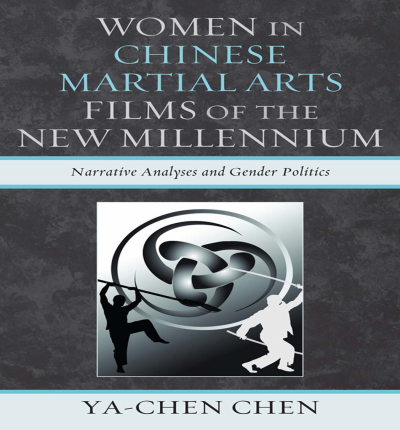
Women in Chinese Martial Arts Films of the New Millennium
Narrative Analyses and Gender Politics
Authors:
Publisher:
2012
Summary
Women and Gender in Chinese Martial Arts Films of the New Millennium, by Ya-chen Chen, is an excavation of underexposed gender issues focusing mainly on contradictory and troubled feminism in the film narratives. In the cinematic world of martial arts films, one can easily find representations of women of Ancient China released from the constraints of patriarchal social order to revel in a dreamlike space of their own. They can develop themselves, protect themselves, and even defeat or conquer men. This world not only frees women from the convention of foot-binding, but it also "unbinds" them in terms of education, critical thinking, talent, ambition, opportunities to socialize with different men, and the freedom or right to both choose their spouse and decide their own fate. Chen calls this phenomenon "Chinese cinematic martial arts feminism."
The liberation is never sustaining or complete, however; Chen reveals the presence of a glass ceiling marking the maximal exercise of feminism and women's rights which the patriarchal order is willing to accept. As such, these films are not to be seen as celebrations of feminist liberation, but as enunciations of the patriarchal authority that suffuses "Chinese cinematic martial arts feminism." The film narratives under examination include Crouching Tiger, Hidden Dragon (directed by Ang Lee); Hero (Zhang Yimou); House of the Flying Daggers (Zhang Yimou); Seven Swords (Tsui Hark); The Promise (Chen Kaige); The Banquet (Feng Xiaogang); and Curst of the Golden Flower (Zhang Yimou). Chen also touches upon the plots of two of the earliest award-winning Chinese martial arts films, A Touch of Zen and Legend of the Mountain, both directed by King Hu.
Search publication
Bibliographic data
Edition
1/2012
Copyright Year
2012
ISBN-Print
978-0-7391-3908-0
ISBN-Online
978-0-7391-3910-3
Publisher
Lexington, Lanham
Language
English
Pages
296
Product Type
Monograph
Table of contents
ChapterPages
Contents No access
Preface No access
Acknowledgments No access
Introduction Toward Social-Cultural and Historical Readings: “Chinese Cinematic Martial Arts Feminism” and Its Limitation in the Narrative of Martial Arts Films No access Pages 1 - 28
1 The Fox, Dragon, and Lotus in Crouching Tiger Hidden Dragon No access
2 To (En)gender the Gendered History in Hero No access
3 There Is a Beauty in the Door(way) of Flying Daggers No access
4 Women Who Do Not Practice Martial Arts in Seven Swords No access
5 Cinderella, Sleeping Beauty, and Snow White in The Promise No access
6 The Chinese Hamlet’s Two Women and Shakespeare’s Chinese Sisters: Qing Nü and Wan’er in The Banquet No access
7 Traffic of Mad women in the Chinese Royal Attic: Gender Concerns in Curse of the Golden Flower No access
8 Let’s Make a Wish: Women’s Wishes under the Cinematic Pen(is) from A Touch of Zen to Crouching Tiger Hidden Dragon, Hero, House of Flying Daggers, and The Promise No access
9 Phallocentric Teacher-Student Complex: From Legend of the Mountain, Crouching Tiger Hidden Dragon, and Hero to Seven Swords No access
10 A Chinese Cinematic Martial Arts Room of Pygmalion’s Own No access
11 Interview with Chung Ling, King Hu’s Spouse and Screenwriter No access
12 Interview with Pan Hua, a Female Classmate and Peer-Director of Zhang Yimou, Chen Kaige, Tian Zhuangzhuang, Wu Ziniu, Li Shaohong, Hu Mei, and Peng Xiaolian No access
13 Interview with Tsai Kuo-jung, a Coplanner and Screenwriter of Ang Lee’s Crouching Tiger Hidden Dragon No access
14 Interview with Wang Wei, a Judge in the Golden Horse Film Festival No access
Appendices No access Pages 243 - 279
Selected Bibliography No access Pages 280 - 292
Index No access Pages 293 - 295
About the Author No access Pages 296 - 296
Similar publications
from the topics "Medienwissenschaft, Kommunikationsforschung"