, to see if you have full access to this publication.
Edited Book No access
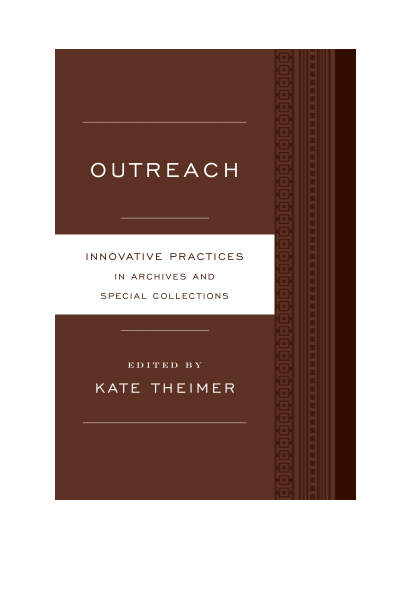
Outreach
Innovative Practices for Archives and Special Collections
Editors:
Publisher:
2014
Summary
Outreach: Innovative Practices for Archives and Special Collections explores how archives of different sizes and types are reaching out to new potential users and increasing awareness of programs and collections. The book features twelve case studies that demonstrate ideas that can be transferred into many other settings. Some of the practices described in the case studies rely primarily on technology and the Web to interact with the public, while others are centered on face-to-face activities.
The case studies featured are The Oregon Archives Crawl: Engaging New Users and Advocates Moved by the Spirit: Opportunistic Promotion of the Hamilton Family Séance Collection Working Within the Law: Public Programming and Continuing Education Staying Connected: Engaging Alumni and Students to Digitize the Carl “Pappy” Fehr Choral Music Collection “Pin”pointing Success: Assessing the Value of Pinterest and Historypin for Special Collections Outreach Creating a New Learning Center: Designing a Space to Support Multiple Outreach Goals "Wikipedia is made of people!”: Revelations from Collaborating with the World's Most Popular Encyclopedia 21 Revolutions: New Art from Old Objects Happy Accidents and Unintended Consequences: How We Named Our Tribble Navigating Nightingale: Creating an App Out of Archives DIY History: Redesigning a Platform for a Transcription Crowdsourcing Initiative Taking Preservation to the People: Educating the Public About Personal Digital Archiving All twelve case studies look at outreach as identifying the organization’s intended audience, building new ways of reaching them, and helping the organization achieve its mission. Each also reflects a philosophy of experimentation that is perhaps the most critical ingredient for any organization interested in developing its own “innovative” practices. This volume will be useful to those working in archives and special collections as well as other cultural heritage organizations, and provides ideas ranging from those that require long-term planning and coordination to those that could be immediately implemented. It also provides students and educators in archives, library, and public history graduate programs a resource for understanding the variety of ways people conduct outreach in the field today and the kinds of strategies archivists are using to attract new users to collections.
Search publication
Bibliographic data
Edition
1/2014
Copyright Year
2014
ISBN-Print
978-0-8108-9097-8
ISBN-Online
978-0-8108-9098-5
Publisher
Rowman & Littlefield, Lanham
Language
English
Pages
185
Product Type
Edited Book
Table of contents
ChapterPages
Contents No access
Introduction No access
Chapter One: The Oregon Archives Crawl No access Pages 1 - 16
Chapter Two: Moved by the Spirit No access Pages 17 - 34
Chapter Three: Working within the Law No access Pages 35 - 46
Chapter Four: Staying Connected No access Pages 47 - 60
Chapter Five: “Pin”pointing Success No access Pages 61 - 76
Chapter Six: Creating a New Learning Center No access Pages 77 - 90
Chapter Seven: “Wikipedia Is Made of People!” No access Pages 91 - 106
Chapter Eight: 21 Revolutions No access Pages 107 - 120
Chapter Nine: Happy Accidents and Unintended Consequences No access Pages 121 - 136
Chapter Ten: Navigating Nightingale No access Pages 137 - 152
Chapter Eleven: DIY History No access Pages 153 - 166
Chapter Twelve: Taking Preservation to the People No access Pages 167 - 180