, to see if you have full access to this publication.
Monograph No access
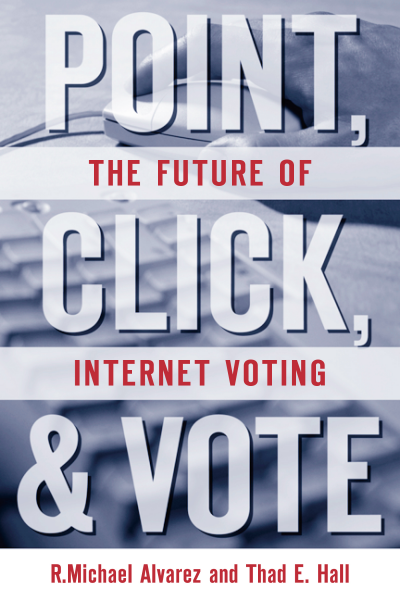
Point, Click, and Vote
The Future of Internet Voting
Authors:
|
Publisher:
2003
Summary
Whether responding to a CNN.com survey or voting for the NFL All-Pro team, computer users are becoming more and more comfortable with Internet polls. Computer use in the United States continues to growmore than half of all American households now have a personal computer. The next question, then, becomes obvious. Should Americans be able to use the Internet in the most important polls of all? Some advocates of Internet voting argue that Americans are well suited to casting their ballots online in political elections. They are eager to make use of new technology, and they have relatively broad access to the Internet. Voting would become easier for people stuck at home, at the office, or on the road. Internet voting might encourage greater political participation among young adults, a group that stays away from the polling place in droves. It would hold special appeal for military personnel overseas, whose ability to vote is a growing concern. There are serious concerns, however, regarding computer security and voter fraud, unequal Internet access across socioeconomic lines (the "digital divide"), and the civic consequences of moving elections away from schools and other polling places and into private homes and offices. After all, showing up to vote is the most public civic activity many Americans engage in, and it is often their only overt participation in the democratic process. In Point, Click, and Vote, voting experts Michael Alvarez and Thad Hall make a strong case for greater experimentation with Internet voting. In their words, "There is no way to know whether any argument regarding Internet voting is accurate unless real Internet voting systems are tested, and they should be tested in small-scale, scientific trials so that their successes and failures can be evaluated." In other words, you never know until you try, and it's time to try harder. The authors offer a realistic plan for putting pilot remote Internet voting programs into effect n
Search publication
Bibliographic data
Edition
1/2003
Copyright Year
2003
ISBN-Print
978-0-8157-0368-6
ISBN-Online
978-0-8157-9627-5
Publisher
Rowman & Littlefield, Lanham
Language
English
Pages
204
Product Type
Monograph
Table of contents
ChapterPages
Table of Contents No access
Preface No access
The Past and Future of Internet Voting No access Pages 1 - 15
Conventional Wisdom about Unconventional Voting No access Pages 16 - 30
Representation and the Digital Divide No access Pages 31 - 53
Internet Voting, Political Debate, and Policymaking No access Pages 54 - 75
Security and Internet Voting No access Pages 76 - 101
Analogies No access Pages 102 - 123
Trials of Internet Voting No access Pages 124 - 146
What Can Be Done to Make Internet Voting a Reality? No access Pages 147 - 170