, to see if you have full access to this publication.
Monograph No access
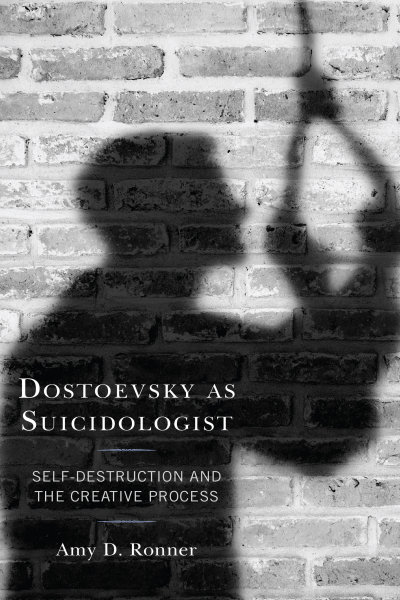
Dostoevsky As Suicidologist
Self-Destruction and the Creative Process
Authors:
Publisher:
2021
Summary
In Dostoevsky as Suicidologist, Amy D. Ronner illustrates how self-homicide in Fyodor Dostoevsky’s fiction prefigures Emile Durkheim’s etiology in Suicide as well as theories of other prominent suicidologists. This book not only fills a lacuna in Dostoevsky scholarship, but provides fresh readings of Dostoevsky’s major works, including Notes from The House of the Dead, Crime and Punishment, The Idiot, Demons, and The Brothers Karamazov. Ronner provides an exegesis of how Dostoevsky’s implicit awareness of fatalistic, altruistic, egoistic, and anomic modes of self-destruction helped shape not only his philosophy, but also his craft as a writer. In this study, Ronner contributes to the field of suicidology by anatomizing both self-destructive behavior and suicidal ideation while offering ways to think about prevention. But most expansively, Ronner tackles the formidable task of forging a ligature between artistic creation and the pluripresent social fact of self-annihilation.
Keywords
Search publication
Bibliographic data
Edition
1/2021
Copyright Year
2021
ISBN-Print
978-1-7936-0781-2
ISBN-Online
978-1-7936-0782-9
Publisher
Lexington, Lanham
Language
English
Pages
344
Product Type
Monograph
Table of contents
ChapterPages
Dedication No access
Contents No access
Acknowledgments No access
Chapter 1 Introduction No access Pages 1 - 48
Chapter 2 Fatalistic Convulsions in Notes from the House of the Dead No access Pages 49 - 94
Chapter 3 Egoistic Self-Decimation in Crime and Punishment and The Idiot No access Pages 95 - 180
Chapter 4 Anomy in Demons and The Brothers Karamazov No access Pages 181 - 286
Chapter 5 The Conclusion No access Pages 287 - 308