, to see if you have full access to this publication.
Monograph No access
Sinascape
Contemporary Chinese Cinema
Authors:
Publisher:
2006
Summary
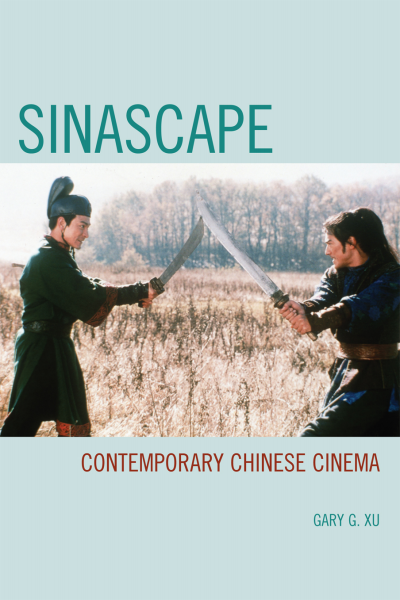
Sinascape: Contemporary Chinese Cinema is one of the most comprehensive studies of transnational Chinese-language films at the turn of the millennium. Gary Xu combines a close reading of contemporary movies from China, Taiwan, and Hong Kong with an intimate look into the transnational Chinese film industry, based on his working relationship with filmmakers. He coins the word "sinascape" to reflect on the intersection between Chinese cinema and global cultural production, referring to cinematic representations of ethnic Chinese people around the globe. Sinascape describes contemporary Chinese cinema as a global network and a group of contact zones where ideologies clash, new identities emerge (through both border crossings and resistance to globalization), and visual innovations and progressive visions become possible. General readers, film enthusiasts, and critics alike will benefit from Xu's discussion of popular film, which leads to a broader conversation about China's economic transformations, global politics, and cultural production. Including discussion of films like Hero, House of Flying Daggers, Kung Fu Hustle, Devils on the Doorstep, Suzhou River, Beijing Bicycle, Millennium Mambo, Goodbye Dragon Inn, and Hollywood Hong Kong, the book emphasizes the transnational nature of contemporary Chinese cinema.
Search publication
Bibliographic data
Edition
1/2006
Copyright Year
2006
ISBN-Print
978-0-7425-5449-8
ISBN-Online
978-1-4616-4288-6
Publisher
Rowman & Littlefield, Lanham
Language
English
Pages
175
Product Type
Monograph
Table of contents
ChapterPages
Contents No access
List of Illustrations No access
Acknowledgments No access
Introduction No access Pages 1 - 24
Chapter 1 The Right to Copy and the Digital Copyright: Hero, House of Flying Daggers, and China's Cultural Symptoms No access Pages 25 - 46
Chapter 2 Violence, Sixth Generation Filmmaking, and Devils on the Doorstep No access Pages 47 - 66
Chapter 3 "My Camera Doesn't Lie": Cinematic Realism and Chinese Cityscape in Beijing Bicycle and Suzhou River No access Pages 67 - 88
Chapter 4 Shaw Brothers' Old Cinema Excavated: From KungFu Hustle to Goodbye, Dragon Inn No access Pages 89 - 110
Chapter 5 The Smell of the City: Memory and Hou Hsiao-hsien's Millennium Mambo No access Pages 111 - 132
Chapter 6 Hollywood Hong Kong, Hollywood HongKong, and the Cinematic Mode of Production No access Pages 133 - 150
Postscript: Remaking East Asia No access Pages 151 - 158
Bibliography No access Pages 159 - 170
Index No access Pages 171 - 174
About the Author No access Pages 175 - 175
Similar publications
from the topics "Medienwissenschaft, Kommunikationsforschung"