, to see if you have full access to this publication.
Edited Book No access
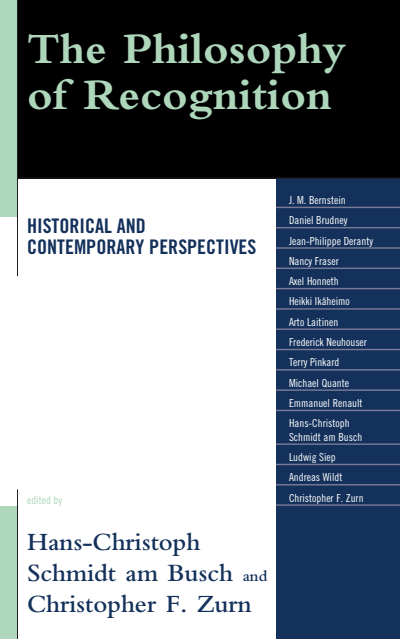
The Philosophy of Recognition
Historical and Contemporary Perspectives
Editors:
|
Publisher:
2009
Summary
The theory of recognition is now a well-established and mature research paradigm in philosophy, and it is both influential in and influenced by developments in other fields of the humanities and social sciences. From debates in moral philosophy about the fundamental roots of obligation, to debates in political philosophy about the character of multicultural societies, to debates in legal theory about the structure and justification of rights, to debates in social theory about the prospects and proper objects of critical theory, to debates in ontology, philosophical anthropology and psychology about the structure of personal and group identities, theories based on the concept of intersubjective recognition have staked out central positions. At the same time, contemporary theories of recognition are strongly, perhaps indissociably, connected to themes in the history of philosophy, especially as treated in German idealism. This volume compromises a collection of original papers by eminent international scholars working at the forefront of recognition theory and provides an unparalleled view of the depth and diversity of philosophical research on the topic. Its particular strength is in exploring connections between the history of philosophy and contemporary research by combining in one volume full treatments of classical authors on recognition_Rousseau, Kant, Fichte, Hegel, Marx, Freud_with cutting edge work by leading contemporary philosophers of recognition, including Fraser, Honneth, and others.
Keywords
Search publication
Bibliographic data
Edition
1/2009
Copyright Year
2009
ISBN-Print
978-0-7391-4425-1
ISBN-Online
978-0-7391-4427-5
Publisher
Lexington, Lanham
Language
English
Pages
378
Product Type
Edited Book
Table of contents
ChapterPages
Contents No access
Chapter 01. Introduction No access Pages 1 - 20
Chapter 02. Rousseau and the Human Drive for Recognition (Amour Propre) No access Pages 21 - 46
Chapter 03. Recognition and Embodiment: Fichte’s Materialism No access Pages 47 - 88
Chapter 04. “The Pure Notion of Recognition”: Reflections on the Grammar of the Relation of Recognition in Hegel’s Phenomenology of Spirit No access Pages 89 - 106
Chapter 05. Recognition in Hegel’s Phenomenology of Spirit and Contemporary Practical Philosophy No access Pages 107 - 128
Chapter 06. Recognition, the Right, and the Good No access Pages 129 - 150
Chapter 07. Producing for Others No access Pages 151 - 188
Chapter 08. “Recognition” in Psychoanalysis No access Pages 189 - 210
Chapter 09. Rethinking Recognition No access Pages 211 - 222
Chapter 10. Work and Recognition: A Redefinition No access Pages 223 - 240
Chapter 11. Taking on the Inheritance of Critical Theory: Saving Marx by Recognition? No access Pages 241 - 256
Chapter 12. Can the Goals of the Frankfurt School be Achieved by a Theory of Recognition? No access Pages 257 - 284
Chapter 13. Critique of Political Economy and Contemporary Critical Theory: A Defense of Honneth’s Theory of Recognition No access Pages 285 - 318
Chapter 14. On the Scope of “Recognition”: The Role of Adequate Regard and Mutuality No access Pages 319 - 342
Chapter 15. Making the Best of What We Are: Recognition as an Ontological and Ethical Concept No access Pages 343 - 368