, to see if you have full access to this publication.
Monograph No access
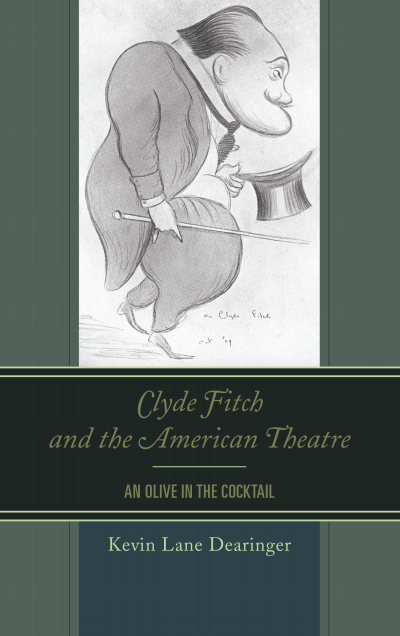
Clyde Fitch and the American Theatre
An Olive in the Cocktail
Authors:
Publisher:
2016
Summary
Clyde Fitch (1865-1909) was the most successful and prolific dramatist of his time, producing nearly sixty plays in a twenty-year career. He wrote witty comedies, chaotic farces, homespun dramas, star vehicles, historical works, stark melodramas, and adaptations of European successes, but he was best known for his society plays, mirroring themes found in the novels of Henry James and Edith Wharton. In fact, Fitch collaborated with Wharton on a stage adaptation of her House ofMirth. He was also a gay man, although that gentler adjective was not the term of his time. He was bullied in school and baited by critics throughout his career for what they supposed of his private life. He responded with impressive strength and integrity. He was, at least for a short time, Oscar Wilde’s lover, and Wilde influenced his early plays, but Fitch’s study of Ibsen and other European dramatists inspired him to pursue the course of naturalism. As he became more successful, he took greater control of the staging and design of his plays. He was a complete man of the theatre and among the first names enrolled in New York’s theatrical hall of fame.
Keywords
Search publication
Bibliographic data
Edition
1/2016
Copyright Year
2016
ISBN-Print
978-1-61147-947-8
ISBN-Online
978-1-61147-948-5
Publisher
University Press Copublishing, Lanham
Language
English
Pages
592
Product Type
Monograph
Table of contents
ChapterPages
Contents No access
Acknowledgments No access
Prologue No access
Chapter One. “Not so delicate, my dear, as you think.” No access
Chapter Two. “I think I’ll stick it out.” No access
Chapter Three. “I am not trying to teach, but I want to suggest.” No access
Chapter Four. “Like the little boy with the ice-cream.” No access
Chapter Five. “You must be happy just as you are, for you can’t be different.” No access
Chapter Six. “Invent me a language of love.” No access
Chapter Seven. “Isn’t it an opportunity!” No access
Chapter Eight. “Certain temperaments of men.” No access
Chapter Nine. “I shut myself up in my room & went to work.” No access
Chapter Ten. “Born differently.” No access
Chapter Eleven. “The right to call the heart in his bosom his own.” No access
Chapter Twelve. “To tell the Truth in the Theatre” No access
Chapter 13. “Bully!” No access
Chapter Fourteen. “Sapho hangs about my neck!” No access
Chapter Fifteen. “I can do the biggest things in my power.” No access
Chapter Sixteen. “Somehow I can’t stop working.” No access
Chapter Seventeen. “Fool that I am, I write too much!” No access
Chapter 18. “Naturalness is absolutely essential.” No access
Chapter Nineteen. “All the same I am ‘De-lighted’” No access
Chapter Twenty. “To take my work, but not myself seriously” No access
Chapter Twenty-One. “Realism is only simplicity and truth.” No access
Chapter Twenty-Two. “Only by directing things myself.” No access
Chapter Twenty-Three. “Tired-er than ever!” No access
Chapter Twenty-Four. “But, if I can only do it well.” No access
Chapter Twenty-Five. “My name on too many playbills.” No access
Chapter Twenty-Six. “My work must speak for itself” No access
Chapter Twenty-Seven. “Happy to be as I am.” No access
Chapter Twenty-Eight. “To die in harness.” No access