, to see if you have full access to this publication.
Monograph No access
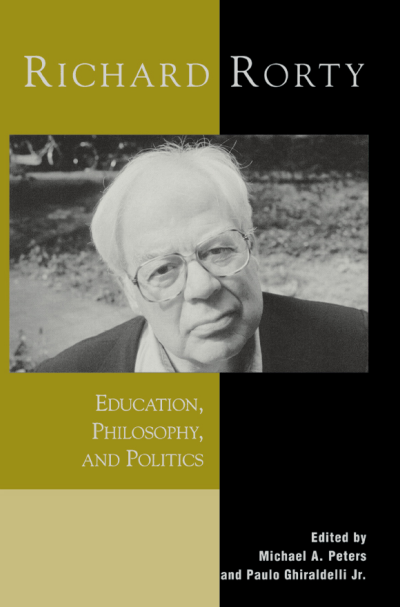
Richard Rorty
Education, Philosophy, and Politics
Authors:
|
Publisher:
2001
Summary
Richard Rorty's neopragmatist philosophy marks him as one of the most gifted and controversial thinkers of his time. Antifoundationalism and antirepresentationalism are the guiding motifs in his thought. He wants to jettison a set of philosophical distinctions—appearance/reality, mind/body, morality/prudence—that have dominated and shaped the history of Western philosophy since the time of Plato. It is a position that has propelled him into a series of heated debates with philosophers who are the most influential of their generation—analytic philosophers such as Quine, Davidson, Rawls, and Putnam; as well as Continental philosophers, including Habermas, Derrida, Foucault, and Lyotard. At the same time, Rorty's work has helped to break down the artificial separation between these two wings of Western philosophy by acting as an intellectual bridge between them. This distinctive collection by scholars from around the world focuses upon the cultural, educational, and political significance of his thought. The nine essays which comprise the collection examine a variety of related themes: Rorty's neopragmatism, his view of philosophy, his philosophy of education and culture, Rorty's comparison between Dewey and Foucault, his relation to postmodern theory, and, also his form of political liberalism.
Search publication
Bibliographic data
Edition
1/2001
Copyright Year
2001
ISBN-Print
978-0-7425-0906-1
ISBN-Online
978-1-4616-4211-4
Publisher
Rowman & Littlefield, Lanham
Language
English
Pages
210
Product Type
Monograph
Table of contents
ChapterPages
Table of Contents No access
Introduction: Rorty's Neopragmatism: Nietzsche, Culture, and Education No access Pages 1 - 14
Chapter 1: Rorty and the Instruments of Philosophy No access Pages 15 - 46
Chapter 2: Rorty, Metaphysics, and the Education of Human Potential No access Pages 47 - 66
Chapter 3: Truth, Trust, and Metaphor: Rorty's Davidsonian Philosophy of Education No access Pages 67 - 78
Chapter 4: On What We May Hope: Rorty on Dewey and Foucault No access Pages 79 - 100
Chapter 5: Richard Rorty and Postmodern Theory No access Pages 101 - 110
Chapter 6: The Political Liberalism of Richard Rorty No access Pages 111 - 138
Chapter 7: Richard Rorty's Self-Help Liberalism: A Marxist Critique of America's Most Wanted Ironist No access Pages 139 - 162
Chapter 8: Richard Rorty and the End of Philosophy of Education No access Pages 163 - 178
Chapter 9: Achieving America: Postmodernism and Rorty's Critique of the Cultural Left No access Pages 179 - 196