, to see if you have full access to this publication.
Monograph No access
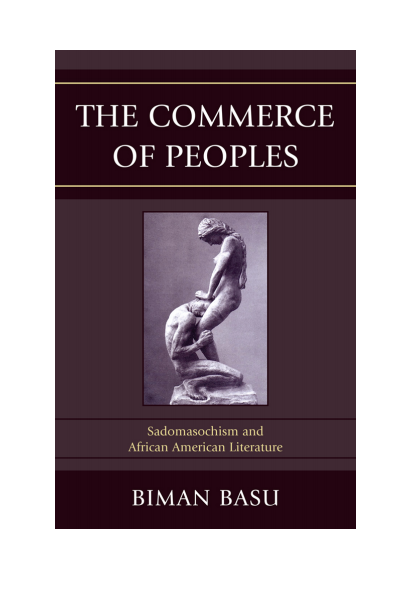
The Commerce of Peoples
Sadomasochism and African American Literature
Authors:
Publisher:
2012
Summary
Representations and coverage of S&M have become quite common nowadays, whether we see them in the fashion industry, commercials, the news, on television, film, the internet, and so on. But in the population at large and in the academic community, too, it is still persistently stigmatized. This marginalization, along with its ambivalently persecuted status, is a result, significantly, of a nineteenth century legacy. This legacy begins with Kraftt-Ebing’s designation of sadomasochism, along with gay and lesbian desire, as a perversion, and continues in the popular and expert (mis)understandings which prevail.
More generally, most people today will recognize that all human relations are power relations. Yet most people will also deny this and mask these power relations by invoking all sorts of things, like romantic love, sentimental attachment, companionate marriage, friendship, peace, non-violence, harmony, and the list goes on, ad nauseam. Not that these do not exist in a sadomasochistic relation, but sadomasochists are unflinching in their recognition that all of these are also permeated by power relations. It is not only impossible to purge these relations of power but for sadomasochists it is also undesirable to do so. It is not only more honest to acknowledge the power that saturates these relations but also more instructive in the sense that S&M provides a context in which one learns to exercise power and to submit to it in a responsible way.
Even in scholarly critical and theoretical discussions of S&M, the prevailing opinion is that the power exercised in sadomasochism is not “real.” It is of course not real in the sense that slavery and violence no longer has a legal status. But reality cannot of course be gauged or even approximated by its legal status alone. For most practitioners, it is hard to deny the reality of pain, of humiliation, of degradation, in the moment of its enactment. One can hardly deny the reality of bringing the whip down on someone’s back or of having it sear across one’s buttocks.
Search publication
Bibliographic data
Edition
1/2012
Copyright Year
2012
ISBN-Print
978-0-7391-6743-4
ISBN-Online
978-0-7391-6744-1
Publisher
Lexington, Lanham
Language
English
Pages
195
Product Type
Monograph
Table of contents
ChapterPages
Contents No access
Acknowledgments No access
1 Introduction No access Pages 1 - 16
2 In Theory No access Pages 17 - 30
3 Slave Narratives and Sadomasochism No access Pages 31 - 50
4 The Genuflected Body of the Masochist in Richard Wright No access Pages 51 - 72
5 Dominant and Submissive in Protest Literature No access Pages 73 - 90
6 Hybrid Embodiment and an Ethics of Masochism No access Pages 91 - 114
7 Perverting Heterosexuality No access Pages 115 - 134
8 Neoslave Narratives and Sadomasochism No access Pages 135 - 154