, to see if you have full access to this publication.
Monograph No access
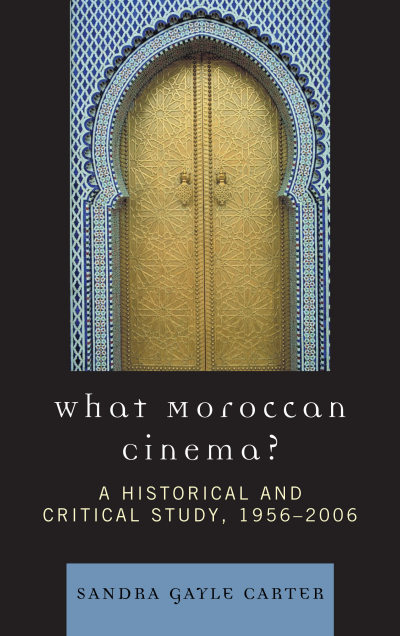
What Moroccan Cinema?
A Historical and Critical Study, 1956D2006
Authors:
Publisher:
2009
Summary
From its early focus on documentary film and nation building to its more recent spotlight on contemporary culture and feature filmmaking, Moroccan cinema has undergone tremendous change since the country's independence in 1956. In What Moroccan Cinema? A Historical and Critical Study, 1956-2006, Sandra Gayle Carter chronicles the changes in Moroccan laws, institutions, ancillary influences, individuals active in the field, representative films, and film culture during this fifty-year span. Focusing on Moroccan history and institutions relative to the cinema industry such as television, newspaper criticism, and Berber videomaking, What Moroccan Cinema? is an intriguing study of the ways in which three historical periods shaped the Moroccan cinema industry. Carter provides an insightful and thorough treatment of the cinema institution, discussing exhibition and distribution, censorship, and cinema clubs and caravans. Carter grounds her analysis by exploring representative films of each respective era. The groundbreaking analysis offered in What Moroccan Cinema? will prove especially valuable to those in film and Middle Eastern studies.
Search publication
Bibliographic data
Edition
1/2009
Copyright Year
2009
ISBN-Print
978-0-7391-3185-5
ISBN-Online
978-0-7391-3187-9
Publisher
Lexington, Lanham
Language
English
Pages
380
Product Type
Monograph
Table of contents
ChapterPages
Contents No access
Acknowledgments No access
Introduction No access Pages 1 - 42
Chapter One: Laying the Industry Foundations, 1956–1970 No access Pages 43 - 88
Chapter Two: Looking to Define a Moroccan Aesthetic, 1971–1985 No access Pages 89 - 186
Chapter Three: New Developments, New Audiences, 1986–2006 No access Pages 187 - 300
Chapter Four: Policies, Recent Developments, Themes, and Conclusions No access Pages 301 - 324