, to see if you have full access to this publication.
Edited Book No access
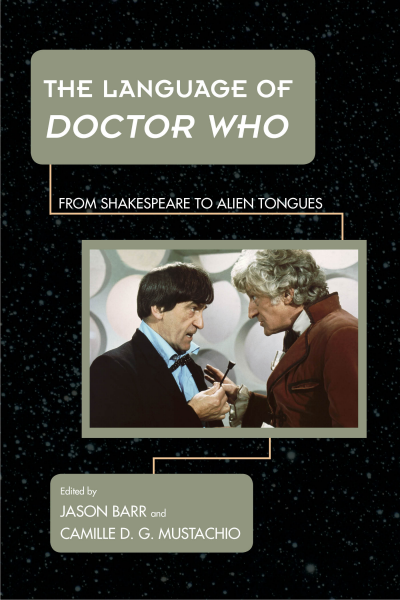
The Language of Doctor Who
From Shakespeare to Alien Tongues
Editors:
|
Publisher:
2014
Summary
In a richly developed fictional universe, Doctor Who, a wandering survivor of a once-powerful alien civilization, possesses powers beyond human comprehension. He can bend the fabric of time and space with his TARDIS, alter the destiny of worlds, and drive entire species into extinction. The good doctor’s eleven “regenerations” and fifty years’ worth of adventures make him the longest-lived hero in science-fiction television.
In The Language of Doctor Who: From Shakespeare to Alien Tongues, Jason Barr and Camille D. G. Mustachio present several essays that use language as an entry point into the character and his universe. Ranging from the original to the rebooted television series—through the adventures of the first eleven Doctors—these essays explore how written and spoken language have been used to define the Doctor’s ever-changing identities, shape his relationships with his many companions, and give him power over his enemies—even the implacable Daleks. Individual essays focus on fairy tales, myths, medical-travel narratives, nursery rhymes, and, of course, Shakespeare. Contributors consider how the Doctor’s companions speak with him through graffiti, how the Doctor himself uses postmodern linguistics to communicate with alien species, and how language both unites and divides fans of classic Who and new Who as they try to converse with each other.
Broad in scope, innovative in approach, and informed by a deep affection for the program, TheLanguage of Doctor Whowill appeal to scholars of science fiction, television, and language, as well as to fans looking for a new perspective on their favorite Time Lord.
Search publication
Bibliographic data
Edition
1/2014
Copyright Year
2014
ISBN-Print
978-1-4422-3480-2
ISBN-Online
978-1-4422-3481-9
Publisher
Rowman & Littlefield, Lanham
Language
English
Pages
283
Product Type
Edited Book
Table of contents
ChapterPages
Contents No access
Acknowledgments No access
Introduction No access
1 Doctor Who? What’s HeTalking About? No access
2 A Contribution to Dialogue No access
3 “The Moment Has Been Prepared For” No access
4 Sensation, Serialization, and Seven No access
5 The Sylvester McCoy Era of Target Books and the Literary Experience No access
6 The Doctor’s Wondrous Wandering Dialectic Approach to the Universe No access
7 The Wolf, the Sparrow, and the River No access
8 Translation Failure No access
9 Brave New Words No access
10 A Utopia of Words No access
11 Silence in the Archives No access
12 Destructive Texts and the Uncanny in “Human Nature” and “Family of Blood” No access
13 “All Your Little Tin Soldiers” No access
14 Fairy Tales, Nursery Rhymes, and Myths in Steven Moffat’s Doctor Who No access
15 The Language of Myth No access
16 The Doctor and Amy Pond No access
17 Language Games in the Whoniverse No access
18 The Discourse of Authenticity in the Doctor Who Fan Community No access
Index No access Pages 275 - 278
About the Contributors and Editors No access Pages 279 - 283
Similar publications
from the topics "Medienwissenschaft, Kommunikationsforschung"