, to see if you have full access to this publication.
Edited Book No access
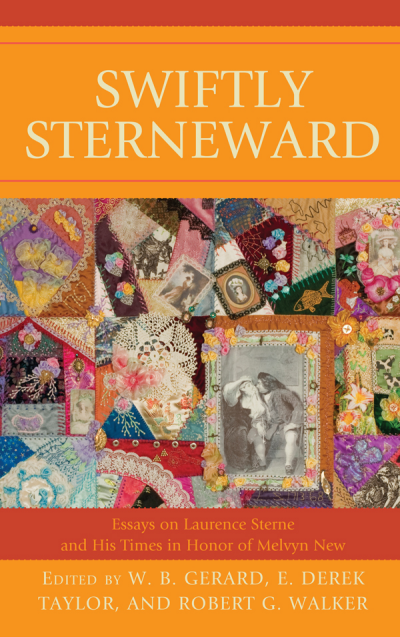
Swiftly Sterneward
Essays on Laurence Sterne and His Times in Honor of Melvyn New
Editors:
| |
Publisher:
2011
Summary
These thirteen essays have been collected to honor Melvyn New, professor emeritus (Florida), and are prefaced by a description of his scholarly career of more than forty years. Suggesting the wide range of that career, the first eight essays offer various critical perspectives on a diverse group of eighteenth-century authors. These include a reading of Eliot in the shadow of Pope; a comparison of Gainsborough’s final paintings and Sterne’s Sentimental Journey; a study of Johnson and casuistry; a discussion of Smollett’s view of slavery in Roderick Random; a bibliographical study of a Lyttelton poem; a comparison of Swift and Nietzsche; and two essays about Fielding’s Joseph Andrews. Laurence Sterne, the primary focus of Professor New’s scholarship, is also the focus of the final five essays, which treat Sterne in contexts as disparate as the kabbalah, abolitionist discourse, local English church politics, the use of the fragment, and, finally, the culture of modernity.
Search publication
Bibliographic data
Edition
1/2011
Copyright Year
2011
ISBN-Print
978-1-61149-058-9
ISBN-Online
978-1-61149-059-6
Publisher
Lexington, Lanham
Language
English
Pages
284
Product Type
Edited Book
Table of contents
ChapterPages
Contents No access
Introduction No access
Selected Publications by Melvyn New No access
Chapter One: Alexander Pope, T. S. Eliot, and the Fate of Poetry No access
Chapter Two: A Sentimental Journey through Thomas Gainsborough’s “Cottage-door” Paintings No access
Photospread No access
Chapter Three: Johnson and Moral Argument: “We talked of the casuistical question. . .” No access
Chapter Four: Slavery in Roderick Random No access
Chapter Five: The Printing and Publication of Three Folio Editions of George Lyttelton’s To the Memory of a Lady Lately Deceased (1747–1748) No access
Chapter Six: Parson Adams’s Sermons: Benjamin Hoadly and Henry Fielding No access
Chapter Seven: Joseph Andrews, Realism, and Openness No access
Chapter Eight: Satire and the Psychology of Religion in Swift and Nietzsche No access
Chapter Nine: Gershom Scholem’s Reading of Tristram Shandy No access
Chapter Ten: Laurence Sterne, the Apostrophe, and American Abolitionism, 1788–1831 No access
Chapter Eleven: Attribution Problems in Sterne’s Ecclesiastical and Secular Politickings No access
Chapter Twelve: Sterne and the Miracle of the Fragment No access
Chapter Thirteen: The Centrality of Sterne in the Culture of Modernity, or Melvyn New and the Rewriting of the West No access