, to see if you have full access to this publication.
Monograph No access
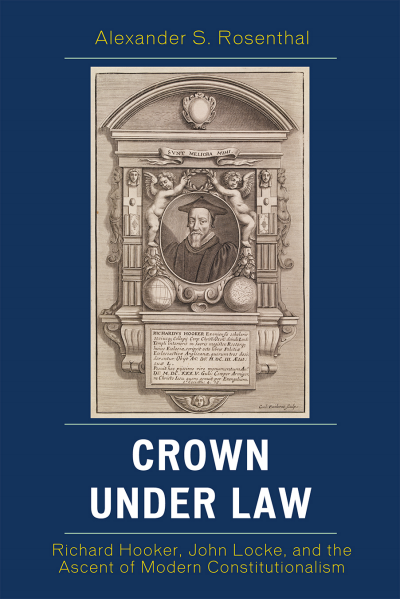
Crown under Law
Richard Hooker, John Locke, and the Ascent of Modern Constitutionalism
Authors:
Publisher:
2008
Summary
Crown under Law is an account of how and why the constitutional idea arose in early modern England. The book focuses on two figures_Richard Hooker and John Locke. Rosenthal represents Hooker as a transitional figure who follows in the medieval natural law tradition even while laying the groundwork for Locke's political thought. The book challenges the influential interpretation of Locke by Leo Strauss (who saw Locke as a radical modernist) by illustrating the lines of continuity between Locke's argument in the Two Treatises of Government and the earlier political tradition represented by Hooker. By illustrating the often distinctive manner in which Hooker addressed the great questions, and how he powerfully affected later developments such as Locke's conception of the state, Rosenthal's Crown under Law establishes the important place of Richard Hooker in the history of political thought.
Search publication
Bibliographic data
Edition
1/2008
Copyright Year
2008
ISBN-Print
978-0-7391-2414-7
ISBN-Online
978-1-4616-3328-0
Publisher
Lexington, Lanham
Language
English
Pages
325
Product Type
Monograph
Table of contents
ChapterPages
Contents No access
Acknowledgments No access
List of Illustrations No access
Crown under Law: A General Introduction No access
1 The Historical and Theological Context of Richard Hooker's Laws No access