, to see if you have full access to this publication.
Monograph No access
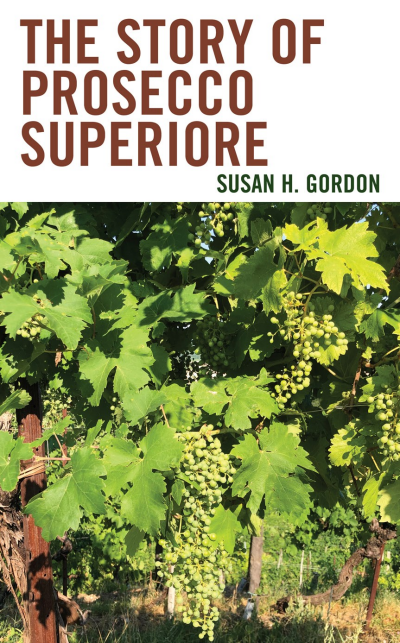
The Story of Prosecco Superiore
Authors:
Publisher:
2024
Summary
Why is Prosecco so popular?
In the United States, Prosecco is now a household word. Throughout the world, Prosecco bottles sell at twice the rate of Champagne’s, even during a pandemic. Although the comparison with Champagne, the great sparkling wine of northern France often erroneously used as synonym of sparkling wine, is a common one, it is not immediately obvious why it should be. This story of Prosecco Superiore — sparkling Prosecco grown in two small hilly historic zones of the ancient Venetian Republic’s interior lands — shows them as uniquely Italian sparkling wines, tracing them to those hills at the second half of the 19th century, time of uprisings that would oust Napoleon’s France and the Habsburgs’ Austria and lead to the creation of an Italian nation. Among the many who fought to make an Italy was a pharmaceutical student born four decades after the fall of Venice: local chemist, follower of ardent Italian insurgent Giuseppe Mazzini, Garibaldian soldier, winemaker, writer, inventor, cheerful and optimistic if informal politician Antonio Carpenè, founder of the oldest Prosecco winery and who created these wines’ prototype a century before materials such as stainless steel would finally exist to make them possible.
To tell the science and history of the making of Prosecco Superiore, its roots in Italian languages and cultures and in the lives and sounds of those hills of the Veneto’s upper Marca Trevigiana long celebrated as sites of the top Prosecco vineyards, this book is written in a style that leads readers to unfamiliar places so that they might move richly and daringly through 150 years of Prosecco’s landscape. The story moves through Carpenè’s days and follows his work into the mid-20th century as modern Prosecco began its rise, then into the 21st as farmers and scientists work Prosecco Superiore’s culture of hills and ingenuity into new blends of complexity, technology, and artisanship. Built on intensive and, as appropriate to wine, wide-ranging research, this story is both an imaginative and personal telling of the histories, methods, and places of Prosecco Superiore and a reader’s guide to wonder and wandering, acts well suited to both the enjoyment and the effects of Italy’s most important sparkling wines.
Keywords
Search publication
Bibliographic data
Edition
1/2024
Copyright Year
2024
ISBN-Print
978-1-5381-9126-2
ISBN-Online
978-1-5381-9128-6
Publisher
Rowman & Littlefield, Lanham
Language
English
Pages
306
Product Type
Monograph
Table of contents
ChapterPages
Contents No access
Introduction No access Pages 1 - 18
1 The Force of Liquid and Gas No access Pages 19 - 46
2 Combinations of Half-Molecules No access Pages 47 - 68
3 Rationalizing Change No access Pages 69 - 78
4 Walking Conegliano No access Pages 79 - 106
5 Prosecco’s Machines No access Pages 107 - 132
6 The First Prosecco Bottle No access Pages 133 - 134
7 Promised Land No access Pages 135 - 168
8 On the Prosecco Road No access Pages 169 - 188
9 Old Mixed Vineyards of the Twenty-first Century No access Pages 189 - 206
Epilogue No access Pages 207 - 212
Glossary No access Pages 213 - 220
Timeline No access Pages 221 - 226
Notes No access Pages 227 - 284
Bibliography No access Pages 285 - 294
Acknowledgement No access Pages 295 - 298
Index No access Pages 299 - 304
About the Author No access Pages 305 - 306
Similar publications
from the topics "Kulturgeschichte & Kulturwissenschaft"