, to see if you have full access to this publication.
Monograph Partial access
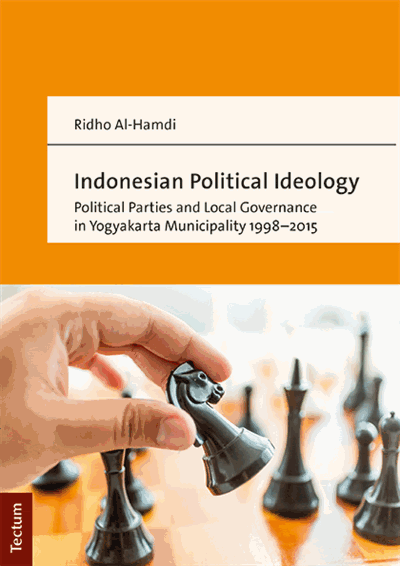
Indonesian Political Ideology
Political Parties and Local Governance in Yogyakarta Municipality 1998-2015
Authors:
Publisher:
2017
Summary
This book examines the influence of political ideology in Indonesia’s political parties to address governance issues during the democratic era, 1998–2015. Further, it investigates the policy, agenda and strategies of three ideological parties in Yogyakarta Municipality in coping with public service issues. The three parties are the Indonesian Democratic Party of Struggle (PDIP), the National Mandate Party (PAN) and the Justice and Prosperous Party (PKS).
Search publication
Bibliographic data
Edition
1/2017
Copyright Year
2017
ISBN-Print
978-3-8288-4058-4
ISBN-Online
978-3-8288-6884-7
Publisher
Tectum, Baden-Baden
Language
German
Pages
288
Product Type
Monograph
Table of contents
ChapterPages
Titelei/Inhaltsverzeichnis Partial access Pages I - XXXIV
1. Why Study Political Ideology in Indonesia? No access
2. Scope and Limitations of this Study No access
3. Objectives of the Study No access
4.1. Case Study No access
4.2. Data-Gathering Techniques No access
4.3. Data Analysis No access
5. Structure of the Study No access
1.1. Understanding Democracy No access
1.2. The Democratisation Wave in Indonesia Today No access
1.3. Decentralisation and its Impacts on Local Politics No access
2.1. Governance and Basic Needs No access
2.2.1. Education Affairs No access
2.2.2. Health Affairs No access
3. Summary No access
1.1. Defining Ideology in the Political Context No access
1.2.1. The Abangan Variant No access
1.2.2. The Santri Variant No access
1.2.3. The Jemaah Tarbiyah Variant No access
2.1. Concept of Political Parties No access
2.2. Model of Party Classification No access
2.3. Change and Goal in a Political Party No access
2.4. The Configuration of Political Cleavage No access
3.1. The Nationalist-Secular: PDIP No access
3.2. The Nationalist-Muslim: PAN No access
3.3. The Nationalist-Islamist: PKS No access
4. Summary No access
1. Introduction No access
2.1. Education No access
2.2. Health No access
3.1. Executive No access
3.2. Legislature No access
3.3. Civil Society No access
3.4. Economic Society No access
4.1. PDIP No access
4.2. PAN No access
4.3. PKS No access
5. Concluding Remarks No access
1.1. Education Issues No access
1.2. Health Issues No access
2. Party Policy-makers No access
3.1. Party Regulation No access
3.2. Internal Stimuli No access
3.3. External Stimuli No access
4. Concluding Remarks No access
1.1. The Commission of Social Welfare No access
1.2. Legislation Body No access
1.3. Budgetary Body No access
1.4. Special Committee No access
2.1. Education System No access
2.2. Retribution of Health Services No access
2.3. Health Insurance No access
2.4. Exclusive Breastfeeding No access
3. Concluding Remarks No access
1.1. Ideological Approach: 2001–2006 No access
1.2. Pragmatic Approach: 2006–2011 No access
1.3. Pragmatic-Opportunist Approach: 2011–2015 No access
2.1. Party and its Fraction: Seemed Solid with a Tiny Clash No access
2.2. Among Fractions: Occasionally Thawing and Freezing No access
3. Concluding Remarks No access
1.1. PDIP: Strengthening Marhaenism Devotees No access
1.2. PAN: Depending on Muhammadiyah Networks No access
1.3. PKS: Maximising Liqo’ Linkages No access
2.1. PDIP: Attempting to Struggle for Wong Cilik? No access
2.2. PAN: Towards a Proportional Cooperation No access
2.3. PKS: Tending towards Less Partnership No access
3. TRIKASWANI: Kampung Santri in the Root of Marhaen No access
4. Concluding Remarks No access
1. Towards a Symbiotic Ideology: Welfarism No access
2.1. Waning Ideology: A Contest in the Power Arena No access
2.2. The Revival of Ideology: Approaching the Grassroots No access
3. Theoretical and Practical Implications No access
4. Proposal for Further Research No access
List of Interviewees No access
Appendix 2 No access
Appendix 3 No access
Appendix 4 No access
Appendix 5 No access
References No access Pages 271 - 288
Similar publications
from the topics "Parteienforschung & Wahlforschung"