, to see if you have full access to this publication.
Monograph No access
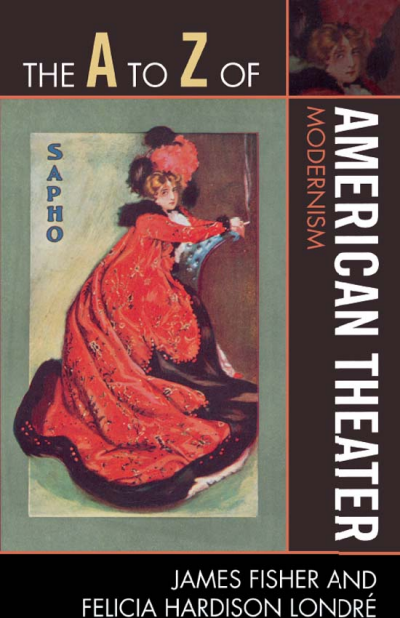
The a to Z of American Theater
Modernism
Authors:
|
Publisher:
2009
Summary
The 50-year period from 1880 to 1929 is the richest era for theater in American history, certainly in the great number of plays produced and artists who contributed significantly, but also in the centrality of theater in the lives of Americans. As the impact of European modernism began to gradually seep into American theater during the 1880s and quite importantly in the 1890s, more traditional forms of theater gave way to futurism, symbolism, surrealism, and expressionism. American playwrights like Eugene O'Neill, George Kelly, Elmer Rice, Philip Barry, and George S. Kaufman ushered in the Golden Age of American drama. The A to Z of American Theater: Modernism focuses on legitimate drama, both as influenced by European modernism and as impacted by the popular entertainment that also enlivened the era. This is accomplished through a chronology, an introductory essay, a bibliography, and hundreds of cross-referenced entries on plays; music; playwrights; great performers like Maude Adams, Otis Skinner, Julia Marlowe, and E.H. Sothern; producers like David Belasco, Daniel Frohman, and Florenz Ziegfeld; critics; architects; designers; and costumes.
Search publication
Bibliographic data
Edition
1/2009
Copyright Year
2009
ISBN-Print
978-0-8108-6884-7
ISBN-Online
978-0-8108-7047-5
Publisher
Rowman & Littlefield, Lanham
Language
English
Pages
571
Product Type
Monograph
Table of contents
ChapterPages
Table of Contents No access
Editor's Foreword No access
Acknowledgments No access
Reader's Note No access
List of Acronyms and Abbreviations No access
Chronology No access
Introduction No access
The Dictionary No access Pages 1 - 534
Bibliography No access Pages 535 - 568
About the Authors No access Pages 569 - 571
Similar publications
from the topics "Medienwissenschaft, Kommunikationsforschung"