, to see if you have full access to this publication.
Monograph No access
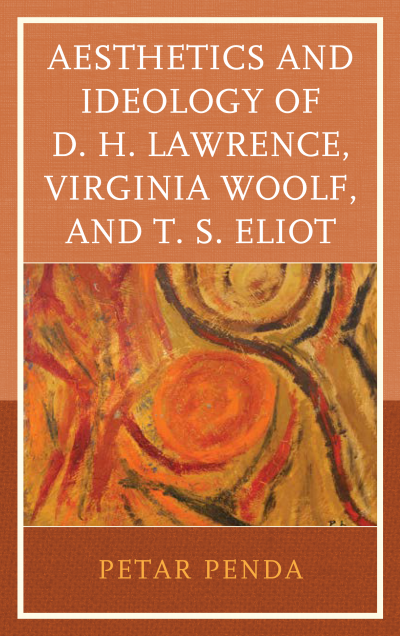
Aesthetics and Ideology of D. H. Lawrence, Virginia Woolf, and T. S. Eliot
Authors:
Publisher:
2017
Summary
Scrutinizing the aesthetic and ideological in the works by Lawrence, Woolf, and Eliot, this book gives a different perspective on Modernism and what are considered to be its principal features. In that respect, fragmentation, disunity, relativity of things, break with tradition, as well as the depiction of life’s disorder, are disputed and seen as aesthetic means for the promotion of certain ideologies.
Aesthetics and Ideology of D. H. Lawrence, Virginia Woolf, and T. S. Eliot offers a smooth transition from general discussion and revision of some fixed concepts related to Modernism, through individual authors and their major works to the conclusion where the main findings are summarized and further explicated.
Apart from dealing with Modernism in general, Aesthetics and Ideology of D. H. Lawrence, Virginia Woolf and T. S. Eliot presents a somewhat different view on the authors it deals with. They are not only seen as opponents of established religious, political, and social views, but to a certain extent as their perpetrators. This duality concerning their stances is reconciled by their insisting on the aesthetic unity.
Keywords
Search publication
Bibliographic data
Edition
1/2017
Copyright Year
2017
ISBN-Print
978-1-4985-2805-4
ISBN-Online
978-1-4985-2806-1
Publisher
Lexington, Lanham
Language
English
Pages
130
Product Type
Monograph
Table of contents
ChapterPages
Contents No access
Acknowledgments No access
Chapter One Introduction No access Pages 1 - 18
Chapter Two Modernism Reconsidered/Reconsidering Modernism No access Pages 19 - 30
Chapter Three Politics, Sex, and Identity in Lady Chatterley’s Lover No access Pages 31 - 40
Chapter Four Private and Public Self Ideology and Aesthetics in Mrs. Dalloway No access Pages 41 - 56
Chapter Five To the Lighthouse—Structure Hidden Behind “Chaotic” Narrative Technique No access Pages 57 - 70
Chapter Six The Politics of MultipleIdentities in Orlando No access Pages 71 - 82
Chapter Seven Aesthetics of (Dis)order in The Waste Land No access Pages 83 - 96
Chapter Eight Aesthetics of Nihilism Convention in the Service of Ideology in T. S. Eliot’s Four Quartets No access Pages 97 - 108