, to see if you have full access to this publication.
Monograph No access
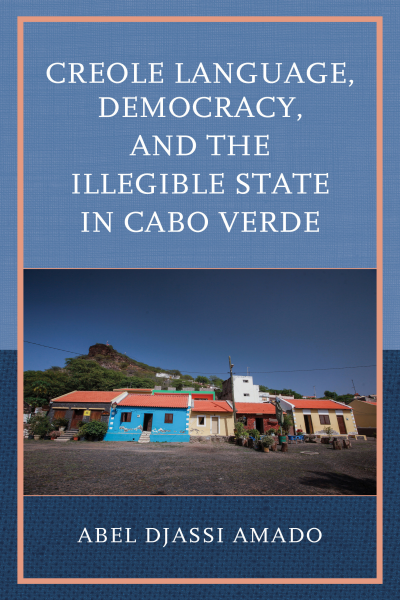
Creole Language, Democracy, and the Illegible State in Cabo Verde
Authors:
Publisher:
2023
Summary
Creole Language, Democracy, and the Illegible State in Cabo Verde uses Cabo Verde as a case study to critically examine the language and politics nexus in a small Creole island state. The current sociolinguistic condition of the country is that of diglossia, whereby Portuguese assumes the language of power, prestige, and high culture at the expense of the mother tongue of its citizens, the Cabo Verdean language, locally known as Kriolu. The postcolonial diglossic language policy stands on both domestic and international factors. Thus, Abel Djassi Amado explores the country’s language policy history since colonial times and discusses how Portugal’s diplomacy grounded on language spread policy has significantly contributed to the secondarization of the mother tongue. The ultimate consequence of the current sociolinguistic situation is the development and crystallization of the illegible state as a large segment of the population cannot comprehend the processes, operations, and procedures of power carried out in a language they do not understand. The illegible state has grave consequences on political participation and the overall quality of democracy.
Keywords
Search publication
Bibliographic data
Edition
1/2023
Copyright Year
2023
ISBN-Print
978-1-6669-2267-7
ISBN-Online
978-1-6669-2268-4
Publisher
Lexington, Lanham
Language
English
Pages
228
Product Type
Monograph
Table of contents
ChapterPages
Contents No access
Preface No access
Acknowledgments No access
Introduction No access Pages 1 - 20
Chapter 1: The Language and Politics Nexus (1890s–1980s) No access Pages 21 - 42
Chapter 2: Contemporary Politics of Language Policy (1991–2022) No access Pages 43 - 64
Chapter 3: The International Politics of the Portuguese Language No access Pages 65 - 88
Chapter 4: Diaspora and the Language and Politics Nexus No access Pages 89 - 114
Chapter 5: The Illegible State in Cabo Verde No access Pages 115 - 136
Chapter 6: Language Policy and Political Participation No access Pages 137 - 156
Chapter 7: The Politics of Linguistic Landscape No access Pages 157 - 180