, to see if you have full access to this publication.
Monograph No access
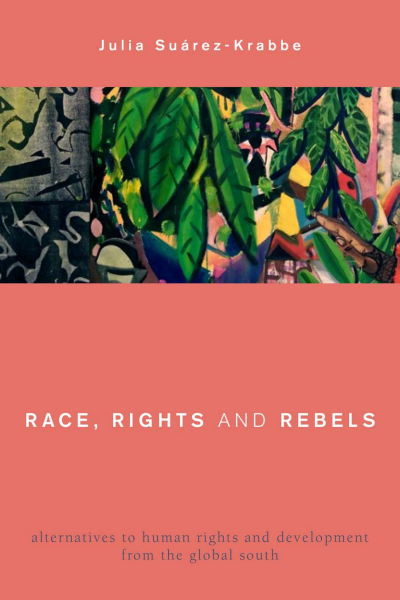
Race, Rights and Rebels
Alternatives to Human Rights and Development from the Global South
Authors:
Publisher:
2015
Summary
Human rights and development cannot be understood separately. They are historically connected by the idea of race, and have evolved concomitantly with the latter. As the tools of race, human rights and development have been forged in the effort to legitimize and maintain coloniality.
While rights and development can be used as tools to achieve protection, specific political goals, or access in the dominant society, they limit radical social change because they are framed within a specific dominant ontology, and sustain a particular political horizon. This book provides an original analysis of the evolution of the overlapping histories of human rights and development through the prism of coloniality, and offers an important contribution to the search for alternatives to these through the lens of indigenous and other southern theories and epistemologies. In this effort, Julia Suárez-Krabbe brings new perspectives to discussions pertaining to the decolonial perspective, race, knowledge, pluriversality, mestizaje and identity while elaborating on original philosophical concepts that can ground alternatives to human rights and development.
Keywords
Search publication
Bibliographic data
Edition
1/2015
Copyright Year
2015
ISBN-Print
978-1-78348-461-4
ISBN-Online
978-1-78348-462-1
Publisher
Rowman & Littlefield, Lanham
Language
English
Pages
202
Product Type
Monograph
Table of contents
ChapterPages
Contents No access
Preface No access
1. Bad Faith and the Death Project No access Pages 1 - 26
2. Teyuna and Columbus No access
3. Race, Rights, and Development No access
4. Rights and Rebels No access
5. Towards Decolonial Methodologies No access
6. Common-Unity No access
7. Identity and the Preservation of Being No access