, to see if you have full access to this publication.
Monograph No access
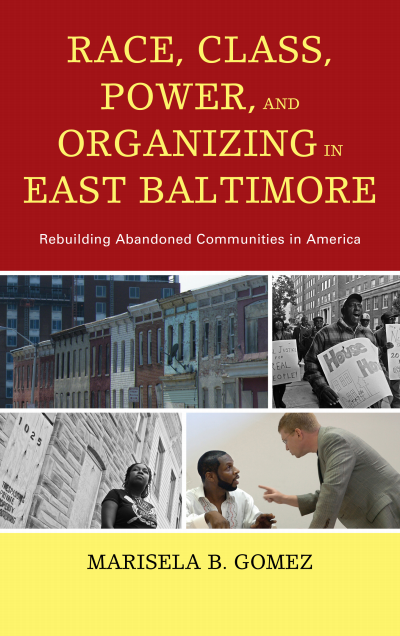
Race, Class, Power, and Organizing in East Baltimore
Rebuilding Abandoned Communities in America
Authors:
Publisher:
2012
Summary
This book examines the historical and current practices of rebuilding abandoned and disinvested communities in America. Using a community in East Baltimore as an example, Race, Class, Power, and Organizing in East Baltimore shows how the social structure of race and class segregation of the past contributed in the creation of our present day urban poor and low-income communities of color; and continue to affect the way we rebuild these communities today. Specific to East Baltimore is the presence of a powerful and prestigious medical complex which has directly and indirectly affected the abandonment and rebuilding of East Baltimore. While it has grown in power and land over the past 100 years, the neighborhoods around it have decreased in size and capital, widening the gap between the rich and the poor. The author offers a critical analysis of the relationships between powerful private institutions like the Johns Hopkins Medical Institutions and government and their intention in rebuilding urban communities by asking the question “How do we determine equity in benefit?” Focusing on a current rebuilding project using eminent domain to displace historical African-American communities, and the acquiring of land for private development, this book details the role of community organizing in challenging these types of non-community participatory rebuilding processes, resulting in the gentrification of urban neighborhoods. The detailed analysis of the community organizing process when families are displaced offers similarly affected communities a tool box for challenging current developers and government in unfair rebuilding practices. The context of these practices highlights the current laws and policies that contribute to continued displacement and disadvantage to poor communities without addressing the rhetoric of the intention of government-subsidized private development. This book examines the effect of such non-participatory and non-transparent rebuilding practices on the health of the people and place.
Keywords
Search publication
Bibliographic data
Edition
1/2012
Copyright Year
2012
ISBN-Print
978-0-7391-7500-2
ISBN-Online
978-0-7391-7501-9
Publisher
Lexington, Lanham
Language
English
Pages
272
Product Type
Monograph
Table of contents
ChapterPages
Contents No access
List of Figures No access
List of Tables No access
List of Boxes No access
Acknowledgments No access
Introduction No access Pages 1 - 14
Chapter 01. Race Separation in Historic East Baltimore: Yesterday and Today No access
Chapter 02. East Baltimore’s Community Rebuilding History: Abandonment and Displacement No access
Chapter 03. Organized Communities and Resistance in East Baltimore’s Past and Present No access
Chapter 04. The First 10 Years of Rebuilding Middle East Baltimore: The Struggle for Inclusion and Justice for All No access
Chapter 05. Who the Stakeholders Are in Rebuilding Middle East Baltimore No access
Chapter 06. Displacement and Disbanding of a Movement for Community Participation: Why, How, and Afterward No access
Chapter 07. Who Benefits and Suffers From Rebuilding Abandoned Communities? No access
Chapter 08. Rebuilding Communities Across the United States and Abroad: What Can East Baltimore Do Better? No access
Chapter 09. Poverty of Health No access
Chapter 10. The Next 10 Years: Moving Toward Equity or the Same Ole Experiment? No access