, to see if you have full access to this publication.
Monograph No access
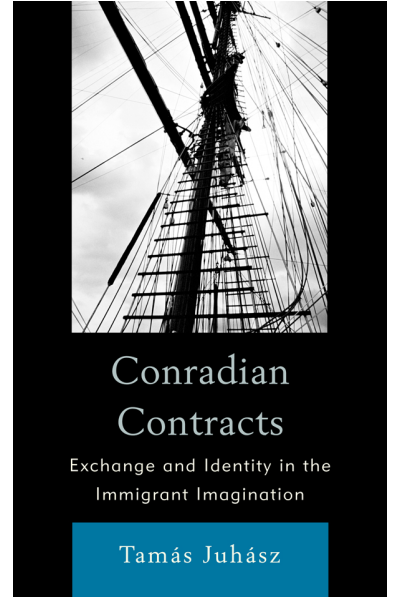
Conradian Contracts
Exchange and Identity in the Immigrant Imagination
Authors:
Publisher:
2011
Summary
This book treats Joseph Conrad's simultaneous interests in exchange, contracts, and the condition of displacement. The central hypothesis is that the novelist's characters face the option of signing or rejecting what might, with some generalization, be called a social covenant. These individuals conduct a lonely or marginal existence and, to ease their isolation, they would like to (re)enter a community. For this reason, they are ready to contribute to larger collective causes and comply with those restrictions that social life, in its contractual aspect, requires. As Julia Kristeva puts it, 'The foreigner is the one who works,' yet engagement in transactions in order to earn a social position is fraught with difficulties. In return for their contribution, these hard-working characters do not always receive the compensation that they had in mind, especially when their definition of companionship violates the boundaries of legality and social propriety. Their private, illicit interests are bound to clash with communal ones, and the ensuing negotiating, readjustment, or compromise-seeking either crush the individual party or result in a redefinition of the notion of contract. This link between exchange and displacement is explored in nine narratives. Just as the concept of exile is used in a broad, often metaphorical sense (ranging from characters who are actual migrants through individuals who occupy a marginal position within their native community to individuals who are caught between conflicting cultural-economic models), the trade or contractual alliance that can create, or at least promise, a sense of communal belonging and personal recognition is also manifold in its definition. Although it always includes, if to varying degrees, the transference of economic goods or entering a specific agreement, exchange is never limited to legal-material procedures. Instead, varius emotional investments, sexual transactions, and narcissistic reciprocities supplement the representation of actual commerce, inviting critical ideas from economic anthropology, post-structuralism and Lacanian psychoanalysis.
Search publication
Bibliographic data
Edition
1/2011
Copyright Year
2011
ISBN-Print
978-0-7391-4553-1
ISBN-Online
978-0-7391-4555-5
Publisher
Lexington, Lanham
Language
English
Pages
219
Product Type
Monograph
Table of contents
ChapterPages
Contents No access
Preface No access
Acknowledgments No access
Abbreviations No access
Chapter One: Commerce and Return in Almayer’s Folly No access Pages 1 - 24
Chapter Two: Trans-Ports of Love No access Pages 25 - 52
Chapter Three: Never Keeping to Oneself No access Pages 53 - 72
Chapter Four: Paternal Discourse and Contractual Revision in Under Western Eyes No access Pages 73 - 94
Chapter Five: “The Duel” No access Pages 95 - 112
Chapter Six: A “Supreme Illusion” No access Pages 113 - 132
Chapter Seven: Trade, Meaning and the Prospects of Self-Transformation in Lord Jim No access Pages 133 - 154
Chapter Eight: The End of Potlatch No access Pages 155 - 176
Chapter Nine: Sympathy, Generosity and the Business of Womanhood in Chance No access Pages 177 - 200
Chapter Ten: Conclusions and Words after Conrad’s No access Pages 201 - 208