, to see if you have full access to this publication.
Monograph No access
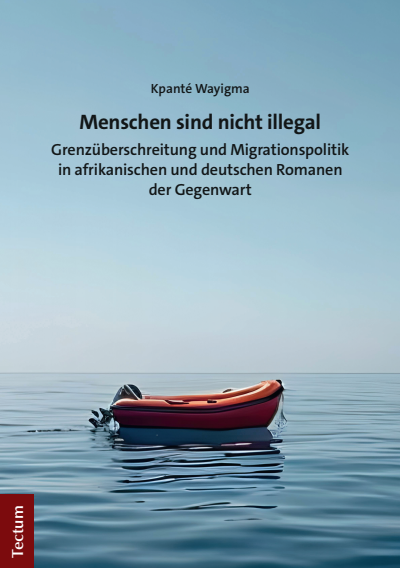
Menschen sind nicht illegal
Grenzüberschreitung und Migrationspolitik in afrikanischen und deutschen Romanen der Gegenwart
Authors:
Publisher:
2024
Summary
Time and time again, reports and political discourse talk about illegal immigration. Immigration from Africa to Europe and its often deadly consequences are described as illegal and dangerous. The immigrants are labeled as refugees, migrants and ultimately as illegal people. The author focuses on selected African and German novels. In doing so, he examines the experiences of crossing borders and takes a literary look at the migration border policy of the receiving countries. Kpanté Wayigma holds a doctorate in Intercultural German Studies from the University of Bayreuth. His field of research is contemporary African-Francophone and German-language migration literature.
Keywords
Search publication
Bibliographic data
Edition
1/2024
Copyright Year
2024
ISBN-Print
978-3-68900-112-4
ISBN-Online
978-3-68900-113-1
Publisher
Tectum, Baden-Baden
Language
German
Pages
312
Product Type
Monograph
Table of contents
ChapterPages
Titelei/Inhaltsverzeichnis No access Pages I - X
1.1. Problemstellung und Hypothese der Arbeit No access
1.2. Forschungsstand und Relevanz des Themas No access
1.3. Ziel der Arbeit und Begründung der zentralen Thematik No access
1.4. Textkorpus No access
1.5.1. Textsoziologie als Literaturwissenschaftler Ansatz No access
1.5.2. Diskursanalyse als literaturwissenschaftlicher Ansatz No access
1.6. Aufbau der Arbeit No access
2.1. »Migration«: eine Annäherung No access
2.2. Zum Begriff »illegale Einwanderung« No access
2.3. Zum Begriff »Flüchtling« No access
3.1. Die politisch strukturellen Ursachen der illegalen Einwanderung No access
3.2. Terrorismus und Konflikte als Ursachen der illegalen Einwanderung No access
3.3. Hunger und Korruption als Folge der illegalen Einwanderung No access
4.1.1. Erzählstrategien in Bleu Blanc Rouge No access
4.1.2. Paris als Eldorado No access
4.1.3. Armut und Perspektivlosigkeit im Herkunftsland No access
4.1.4. llegale Einwanderung als »sozialer Aufstieg« No access
4.1.5. Identitätsfrage bei dem illegalen Einwanderungsprotagonisten No access
4.1.6. Gefälschte Papiere als Strategie des Überlebens No access
4.1.7. Von illegalen Einwanderern zu delinquenten Subjekten No access
4.1.8. Inszenierung des Gefängnisses No access
4.1.9. Die Abschiebung No access
4.1.10. Der zerbrochene Traum bei dem illegalen Einwanderungsprotagonisten No access
4.2.1. Erzählstrategie in Le pacte du Silence. Le drame de l’immigration clandestine No access
4.2.2. Heimatland als Ort ohne Zukunftsperspektive No access
4.2.3. Grenzüberschreitungserfahrung No access
4.2.4. Risikobereitschaft des illegalen Einwanderungsprotagonisten No access
4.2.5. Weibliche Figur als illegale Einwanderin No access
4.2.6.1. Ali und Moustapha als typische illegale Einwanderer No access
4.2.6.2. Moussa und Hanfareh als Schlepper No access
4.2.7. Die Symbolik des Schweigens No access
4.2.8. Der Roman Hachis als Diskurs gegen illegale Einwanderung No access
4.2.9. Enttäuschung bei dem überlebenden illegalen Einwanderungsprotagonisten No access
4.3. Schreiben als Kritik No access
5.1.1. Zur Erzählstrategie in Illegal. Wir sind viele. wir sind da No access
5.1.2. Heimatland als Ort des Abgrundes No access
5.1.3. Weibliche Figur als illegale Einwanderin No access
5.1.4. Schwarzarbeit für illegale Einwanderer No access
5.1.5. Grenzerfahrungen No access
5.2.1. Narrative Menschenrechtsverletzung an der Grenze No access
5.2.2. Inszenierung des Grenzregimes No access
5.3. Schreiben als Kritik No access
VI. Illegale Einwanderung in afrikanisch-frankofonen und deutschsprachigen Werken: Schlussbemerkungen No access Pages 289 - 300
Literaturverzeichnis No access Pages 301 - 312
Similar publications
from the topics "Kulturgeschichte & Kulturwissenschaft"