, to see if you have full access to this publication.
Monograph No access
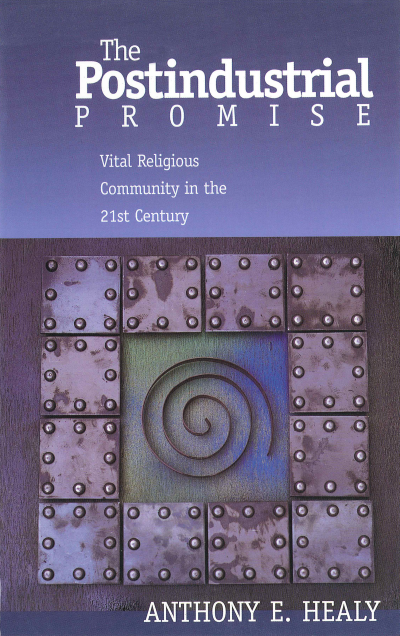
The Postindustrial Promise
Vital Religious Community in the 21st Century
Authors:
Publisher:
2005
Summary
Tales of demise and decline have come to characterize news on the state of religion and congregations in America. In The Postindustrial Promise, author Anthony Healy finds that the changes in religious life and among congregations are being misunderstood. Instead of seeing the changes as the result of the presumed aspects of postmodern life—individualism, the collapse of social groups, and the scrapping of tradition—Healy sees what has occurred as a postindustrial transformation, in which an economy based on manufacturing has been replaced by one based on corporate and consumer services. This transformation has changed what we value and how we live, as well as how we work. It has also changed congregations and religious life, but not necessarily in the way that many people think. Contrary to the stories of decline, Healy finds that in this time of postindustrial dislocation people are again putting down religious roots. Congregations are making it possible for people to reconnect with the stories and traditions of previous generations and have become the places in society where the reembodying of religious and cultural narratives is taking place. Different from the postmodern script, this postindustrial explanation leads us to fresh insights into the change that has occurred among religious bodies, their congregants, and their communities. This book provides pastors, lay leaders, teachers, scholars, and seminarians with a solid grounding in the basic aspects of the postindustrial transformation and offers direction to help religious leaders develop responsive and viable places of ministry, mission, and program in this time of change.
Keywords
Search publication
Bibliographic data
Copyright Year
2005
ISBN-Print
978-1-56699-287-9
ISBN-Online
978-1-56699-668-6
Publisher
Rowman & Littlefield, Lanham
Language
English
Pages
138
Product Type
Monograph
Table of contents
ChapterPages
Contents No access
Preface No access
Chapter 1: Getting Religion Right No access Pages 1 - 22
Chapter 2: Change in Postindustrial America No access Pages 23 - 46
Chapter 3: The Right Place for Me No access Pages 47 - 64
Chapter 4: Understanding Subcultures and Uniformity No access Pages 65 - 82
Chapter 5: Fresh Perspectives on Form and Style No access Pages 83 - 100
Chapter 6: Telling the Tale Anew No access Pages 101 - 116
Notes No access Pages 117 - 126
Bibliography No access Pages 127 - 138
Similar publications
from the topics "Religion und Theologie allgemein"