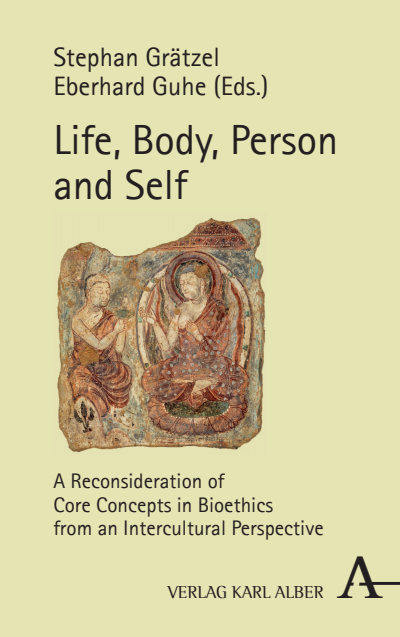
Life, Body, Person and Self
A Reconsideration of Core Concepts in Bioethics from an Intercultural Perspective- Editors:
- |
- Publisher:
- 2017
Summary
Das Ziel des Sammelbandes ist es, in der aktuellen bioethischen Debatte neue Impulse zu setzen, da sie augenscheinlich mit ihrem Personenbegriff noch keine zufriedenstellenden Ergebnisse erreicht hat. Die, auf den ersten Blick, nonpersonale buddhistische Ethik mit ihrem annatā-Konzept könnte auf die drängenden bioethischen Fragen und Probleme neue Antworten finden. Sie steht deshalb im Zentrum dieses Bandes.Andere Beiträge beschäftigen sich mit den Themen Leben, Körper/Leib, Person und Selbst und stellen indische, afrikanische und westliche Standpunkte vor. So kann aufgezeigt werden, wie reich die Debatte an kulturell wie theoretisch unterschiedlichen Perspektiven ist. Schließlich werden noch die Feldforschungs-Ergebnisse aus Sri Lanka, Ladakh und Dharmasala des durch die DFG finanzierten Projekts präsentiert, womit erst die ambitionierte Aufgabe des Bandes erfüllt werden konnte, die festgefahrene Diskussion in der Bioethik mit alternativen Blickwinkeln wiederzubeleben. Mit Beiträgen von Stephan Grätzel, Paul Nnodim, Patricia Rehm-Grätzel, Dirk Solies, Tobias Schlicht, Michael von Brück, Jens Schlieter, Eberhard Guhe, Mark Siderits, Alfred Weil, Jonardon Ganeri, Volker Caysa, Matthias Koßler und Stephan Schaede.
Keywords
Search publication
Bibliographic data
- Copyright Year
- 2017
- ISBN-Print
- 978-3-495-48812-6
- ISBN-Online
- 978-3-495-81812-1
- Publisher
- Karl Alber, Baden-Baden
- Language
- English
- Pages
- 304
- Product Type
- Edited Book
Table of contents
- Titelei/Inhaltsverzeichnis No access Pages 1 - 4
- Contents No access Pages 5 - 6
- Introduction No access Pages 7 - 13
- Authors:
- 1. Why Person? – On the Practical Relevance of the Concept of Person No accessAuthors:
- 2. The Crypto-Prescriptive Status of the Concept of Person – a Conceptual Criticism No accessAuthors:
- 3. Refraining from Using the Concept of Person – an Alternative? No accessAuthors:
- Literature No accessAuthors:
- Authors:
- 1. No accessAuthors:
- 2. No accessAuthors:
- 3. No accessAuthors:
- 4. No accessAuthors:
- Literatur No accessAuthors:
- Authors:
- 1. Motivation der Forschungsreisen No accessAuthors:
- 2. Interviewpartner, Ort und Inhalt der Interviews No accessAuthors:
- 3. Ergebnisse No accessAuthors:
- 4. Fazit No accessAuthors:
- Authors:
- Literature No accessAuthors:
- Authors:
- Literature No accessAuthors:
- Authors:
- Summary No accessAuthors:
- The Self is Inescapable No accessAuthors:
- The definition of Person No accessAuthors:
- The Moods of Speech-Act No accessAuthors:
- Justifying Life No accessAuthors:
- Authors:
- 1. Introduction No accessAuthors:
- Authors:
- Authors:
- The Body or Ahu No accessAuthors:
- Mmuo or Spirit No accessAuthors:
- Chi No accessAuthors:
- Chi as Creative Essence of the Supreme Creator or Chi-ukwu No accessAuthors:
- Chi as Complementary Spirit No accessAuthors:
- Chi as Destiny No accessAuthors:
- 2.2. The Extrinsic or Normative Dimension of Person No accessAuthors:
- 3. Conclusion No accessAuthors:
- Literature No accessAuthors:
- Authors:
- 1. Kant and person No accessAuthors:
- 2. Is God a person? No accessAuthors:
- 3. Jesus Christ – a person? No accessAuthors:
- 4. Person as a Phenomenon of Representation No accessAuthors:
- Literature No accessAuthors:
- Authors:
- 1. No accessAuthors:
- 2. No accessAuthors:
- 3. No accessAuthors:
- 4. No accessAuthors:
- 5. No accessAuthors:
- 6. No accessAuthors:
- 7. No accessAuthors:
- Literature No accessAuthors:
- Authors:
- 1. No accessAuthors:
- Authors:
- a) No accessAuthors:
- b) No accessAuthors:
- c) No accessAuthors:
- Literature No accessAuthors:
- Authors:
- Introduction No accessAuthors:
- The Conventional ›I‹ and the Belief in ›I‹ No accessAuthors:
- What Follows from the Belief in ›I‹ No accessAuthors:
- Authors:
- 1. Realising that ›the solid‹ is a compound structure No accessAuthors:
- 2. Realising ›the static‹ as dynamic No accessAuthors:
- Authors:
- 4. Realising ›the sovereign’s‹ existential lack of power No accessAuthors:
- Shifting Perspectives – Bringing about a ›Conversion‹ of the Mind (and Heart) No accessAuthors:
- Conclusion and Outlook No accessAuthors:
- Authors:
- Literature No accessAuthors:
- Authors:
- Impersonalism: Dismantling the First Person Stance No accessAuthors:
- Three Arguments against Impersonalism No accessAuthors:
- Inward Empathy: No-Self as a Second-Personal Stance No accessAuthors:
- Conclusion No accessAuthors:
- Literature No accessAuthors:
- Authors:
- 1. Bioethics and Globalization No accessAuthors:
- 2. The Emergence of »Buddhist Bioethics« No accessAuthors:
- 3. »Personhood« and »Selflessness«: An Unresolved Conflict in Buddhist Bioethics? No accessAuthors:
- 4. The Ethical Relevance of the »No-Self«-Theory No accessAuthors:
- 5. Human Dignity: Key Concept of Western Bioethics No accessAuthors:
- 6. Human Dignity in Buddhist Ethics? No accessAuthors:
- 7. Conclusion: »No-self«, »Dignity« and »Human Rights« in Buddhist Bioethics: A Shift from »First-Person« to »Third-Person Ethics«? No accessAuthors:
- Abbreviations No accessAuthors:
- Literature No accessAuthors:
- Authors:
- The Strong First-Person Requirement No accessAuthors:
- Is Bodily Transfer Possible? No accessAuthors:
- The Embodied Self No accessAuthors:
- Core Self as Bodily Presence No accessAuthors:
- Literature No accessAuthors:
- Authors:
- 1. Self as Thing or Essence No accessAuthors:
- Authors:
- a. The argument from the structure of intentionality No accessAuthors:
- b. The argument from the structure of consciousness No accessAuthors:
- c. The argument from embodied and situated cognition No accessAuthors:
- 3. Organisms as Selves No accessAuthors:
- 4. Conclusion No accessAuthors:
- Literature No accessAuthors:
- Authors:
- Literature No accessAuthors:
- Authors:
- Literature No accessAuthors:
- Contributors No access Pages 303 - 304