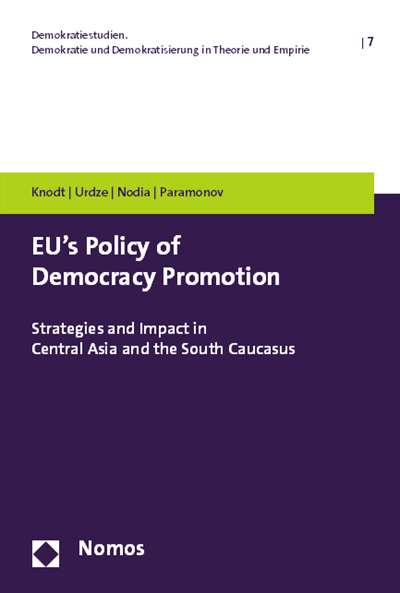
EU's Policy of Democracy Promotion
Strategies and Impact in Central Asia and the South Caucasus- Authors:
- | | |
- Publisher:
- 2018
Summary
Demokratieförderung ist zentraler Bestandteil der Politik der EU gegenüber dem Südkaukasus und Zentrala-sien. Das deutsch-georgisch-usbekische Autorengespann gibt in diesem Buch Antwort auf die folgenden vier Fragen: Mit welchen Instrumenten und auf welche Art fördert die EU die Demokratie in den Staaten des Südkaukasus und in Zentralasien? Wie kann die gewählte Vorgehensweise bei der Demokratieförderung erklärt werden? Welche Wirkung hat die Demokratieförderung der EU? Wie kann diese Wirkung erklärt werden? Zur Beantwortung der Fragen werden, anders als in bisher vorliegenden Studien, sämtliche Aktivitäten der EU im Bereich der Demokratieförderung einbezogen. Die Analyse basiert zudem auf einer Vielzahl von Interviews und Daten, die von dem Autorengespann in Brüssel, wie auch im Südkaukasus und Zentralasien durchgeführt bzw. erhoben wurden.
Mit Beiträgen von
Michèle Knodt, Ghia Nodia, Vladimir Paramonov, Sigita Urdze
Search publication
Bibliographic data
- Edition
- 1/2018
- Copyright Year
- 2018
- ISBN-Print
- 978-3-8487-2960-9
- ISBN-Online
- 978-3-8452-7352-5
- Publisher
- Nomos, Baden-Baden
- Series
- Demokratiestudien. Demokratie und Demokratisierung in Theorie und Empirie
- Volume
- 7
- Language
- English
- Pages
- 319
- Product Type
- Monograph
Table of contents
- Titelei/Inhaltsverzeichnis No access Pages 1 - 8
- Authors: |
- Choice and mode of EU democracy promoting instruments in the countries of Southern Caucasus and Central Asia No accessAuthors: |
- Explaining EU’s democracy promotion in the countries of Southern Caucasus and Central Asia No accessAuthors: |
- Impact of EU’s democracy promotion on the democratic quality of the countries of Southern Caucasus and Central Asia No accessAuthors: |
- Explaining the impact of the EU’s democracy promotion in the countries of Southern Caucasus and Central Asia No accessAuthors: |
- Authors: |
- 1. Analytical framework and hypotheses No accessAuthors: |
- 2. Assessing the EU’s external democracy promotion in the South Caucasus and Central Asia No accessAuthors: |
- Authors: |
- 3.1 Strength of norm violations by a third country No accessAuthors: |
- 3.2 Degree of public perception in the EU of norm violations in a third country No accessAuthors: |
- 3.3 Security interests of the EU/EU’s member states, including the presence/absence of alternative interested actors No accessAuthors: |
- 3.4 Economic interests of the EU/EU’s member states, including the presence/absence of alternative interested actors No accessAuthors: |
- 4. Conclusion No accessAuthors: |
- Authors:
- 1. The South Caucasus as a “failing region”: Divided and diverse No accessAuthors:
- 2. Positioning the South Caucasus vis-à-vis Europe: A comparison with the Balkans and Central Asia No accessAuthors:
- 3. 1991-2004: The EU as a benevolent but weak player in the South Caucasus No accessAuthors:
- 4. 2004-2009: ENP enhancing the status of the South Caucasus within EU policies No accessAuthors:
- 5. European Partnership: The EU as an emergent but reluctant actor in South Caucasus geopolitics No accessAuthors:
- 6. Democracy promotion, the politics of identity, and competition for power No accessAuthors:
- 7. Georgia: Identity and pro-Western policies No accessAuthors:
- 8. Struggling in the Grey Zone: The State of Georgia’s Democracy No accessAuthors:
- 9. How can and did the EU impact Georgian democracy? No accessAuthors:
- 10. Armenia: The Fruits of Military Victory, Regional Isolation and Dependence on Russia No accessAuthors:
- 11. Hostage to Security: Relations with the EU and its Impediments No accessAuthors:
- 12. Oligarchy with a Democratic Façade: Where Is Europe’s Impact? No accessAuthors:
- 13. Modernism and Secularism: the Inception of Azerbaijan’s European Identity No accessAuthors:
- 14. Linkage to the West through Oil: The Failure of Azerbaijan’s European Identity No accessAuthors:
- 15. Oil-based Autocracy and Waning influence of the West No accessAuthors:
- 16. Conclusions No accessAuthors:
- Authors:
- 1. Introduction No accessAuthors:
- Authors:
- 2.1 Political sphere No accessAuthors:
- 2.2 Economic sphere No accessAuthors:
- 2.3 Security sphere No accessAuthors:
- 2.4 Social sphere No accessAuthors:
- Authors:
- Authors:
- Factors leading to increased impact of the EU No accessAuthors:
- Factors leading to a weakening of EU impact No accessAuthors:
- Authors:
- Factors leading to increased impact of the EU No accessAuthors:
- Factors leading to a weakening of EU impact No accessAuthors:
- Authors:
- Factors leading to increased impact of the EU No accessAuthors:
- Factors leading to a weakening of EU impact No accessAuthors:
- Authors:
- Factor leading to increased impact of the EU No accessAuthors:
- Factors leading to a weakening of EU impact No accessAuthors:
- 3.5 Conclusions No accessAuthors:
- Authors:
- Authors:
- Factors leading to increased impact of the EU No accessAuthors:
- Factors leading to a weakening of EU impact No accessAuthors:
- Authors:
- Factors leading to increased impact of the EU No accessAuthors:
- Factors leading to a weakening of EU impact No accessAuthors:
- Authors:
- Factors leading to increased impact of the EU No accessAuthors:
- Factors leading to a weakening of EU impact No accessAuthors:
- Authors:
- Factors leading to increased impact of the EU No accessAuthors:
- Factors leading to a weakening of EU impact No accessAuthors:
- 4.5 Conclusions No accessAuthors:
- Authors:
- Authors:
- Factors leading to increased impact of the EU No accessAuthors:
- Factors leading to a weakening of EU impact No accessAuthors:
- Authors:
- Factors leading to increased impact of the EU No accessAuthors:
- Factors leading to a weakening of EU impact No accessAuthors:
- Authors:
- Factors leading to increased impact of the EU No accessAuthors:
- Factors leading to a weakening of EU impact No accessAuthors:
- Authors:
- Factors leading to increased impact of the EU No accessAuthors:
- Factors leading to a weakening of EU impact No accessAuthors:
- 5.5 Conclusions No accessAuthors:
- Authors:
- Authors:
- Factors leading to increased impact of the EU No accessAuthors:
- Factors leading to a weakening of EU impact No accessAuthors:
- Authors:
- Factors leading to increased impact of the EU No accessAuthors:
- Factors leading to a weakening of EU impact No accessAuthors:
- Authors:
- Factors leading to increased impact of the EU No accessAuthors:
- Factors leading to a weakening of EU impact No accessAuthors:
- Authors:
- Factors leading to increased impact of the EU No accessAuthors:
- Factors leading to a weakening of EU impact No accessAuthors:
- 6.5 Conclusions No accessAuthors:
- Authors:
- Authors:
- Factors leading to increased impact of the EU No accessAuthors:
- Factors leading to a weakening of EU impact No accessAuthors:
- Authors:
- Factors leading to increased impact of the EU No accessAuthors:
- Factors leading to a weakening of EU impact No accessAuthors:
- Authors:
- Factors leading to increased impact of the EU No accessAuthors:
- Factors leading to a weakening of EU impact No accessAuthors:
- Authors:
- Factors leading to increased impact of the EU No accessAuthors:
- Factors leading to a weakening of EU impact No accessAuthors:
- 7.5 Conclusions No accessAuthors:
- 8. Conclusion No accessAuthors: