, to see if you have full access to this publication.
Monograph No access
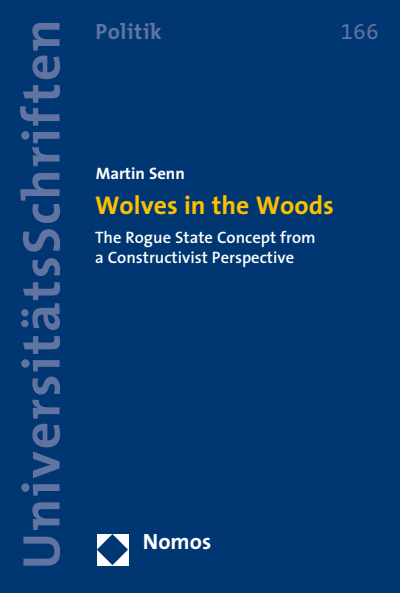
Wolves in the Woods
The Rogue State Concept from a Constructivist Perspective- Authors:
- Series:
- Nomos Universitätsschriften - Politik, Volume 166
- Publisher:
- 2009
Summary
Seit dem Ende der 1980er Jahre nimmt das Konzept der Schurkenstaaten einen zentralen Stellenwert in der Außen- und Sicherheitspolitik der USA ein. Das vorliegende Buch ist ein innovativer Beitrag zur wissenschaftlichen Debatte über das Feindbild und analysiert dieses aus einer konstruktivistischen Perspektive.
Das Werk liefert Antworten auf die Frage, warum führende Politiker in Washington eine Gruppe von Staaten als aggressive, äußerst risikobereite und sogar als irrationale Außenseiter im internationalen System wahrnehmen. Zudem liegt ein weiterer Fokus der Analyse auf den Bedrohungsperzeptionen der als Schurken stigmatisierten Staaten.
Search publication
Bibliographic data
- Edition
- 1/2009
- Copyright Year
- 2009
- ISBN-Print
- 978-3-8329-4369-1
- ISBN-Online
- 978-3-8452-1583-9
- Publisher
- Nomos, Baden-Baden
- Series
- Nomos Universitätsschriften - Politik
- Volume
- 166
- Language
- English
- Pages
- 226
- Product Type
- Monograph
Table of contents
ChapterPages
- Titelei/Inhaltsverzeichnis No access Pages 2 - 10Authors:
- Abbreviations No access Pages 11 - 12Authors:
- Ye Rogues! No access Pages 13 - 15Authors:
- The Rogue State as an Objective Category No access Pages 15 - 17Authors:
- Authors:
- Objective Representation – The Conservative Perspective No accessAuthors:
- Subjective Exaggeration – The Liberal Perspective No accessAuthors:
- True Rogues – The Left-Wing Perspective No accessAuthors:
- Ideational Structures – The Interpretivist Perspective No accessAuthors:
- Ontological and Epistemological Positions No access Pages 25 - 30Authors:
- Central Research Questions, Methods, and Structure No access Pages 30 - 31Authors:
- Selecting the Cases - The Core Group of Rogue States No access Pages 31 - 33Authors:
- A Challenge to the Traditional Concept of Anarchy No access Pages 34 - 35Authors:
- Identities and Interests of State Actors No access Pages 35 - 37Authors:
- Immaterial Micro- and Macro-Structures of a Social System No access Pages 37 - 38Authors:
- Hobbesian, Lockean and Kantian Cultures of Anarchy No access Pages 38 - 42Authors:
- Cultural Change No access Pages 42 - 43Authors:
- Behavioral Patterns of Hobbesian Actors No access Pages 43 - 48Authors:
- Authors:
- The Neglect of Unit-Level Processes No accessAuthors:
- Authors:
- Culture Bearing Actors No accessAuthors:
- The Process of Interpretation No accessAuthors:
- Specification of the Central Research Questions No access Pages 57 - 57Authors:
- Offensive Revisionism during the East-West Conflict No access Pages 58 - 60Authors:
- Existential Insecurity after the East-West Conflict No access Pages 60 - 65Authors:
- North Korea’s External Behavior – Rationality and Defiance No access Pages 65 - 69Authors:
- Pre-Revolutionary Factors shaping Iran’s World View No access Pages 69 - 72Authors:
- Early Revolutionary Iran – Revisionism and “Great Satan” No access Pages 72 - 77Authors:
- Authors:
- Constrained Revisionism and Internal Fragmentation No accessAuthors:
- Iran and the USA – Thwarted Détente and Existential Fear No accessAuthors:
- Contemporary Iran – Ad Fontes No access Pages 87 - 90Authors:
- Authors:
- Pragmatism and Rogue Behavior No accessAuthors:
- Iran’s Nuclear Program No accessAuthors:
- Libya’s Experience of Colonialism No access Pages 97 - 100Authors:
- The (In)dependent Monarchy and the Seeds of Confrontation No access Pages 100 - 104Authors:
- Authors:
- The Ideological Positions of Mu’ammar al-Qadhafi No accessAuthors:
- Revolutionary Radicalism and Antagonism with the USA No accessAuthors:
- Factors Triggering Libya’s Change of Course No accessAuthors:
- Libya’s Rapprochement with the USA No accessAuthors:
- Libya’s Quest for WMD No access Pages 118 - 120Authors:
- The Hobbesian Reality of the Iraqi State No access Pages 120 - 123Authors:
- Saddam Hussein’s Ascendancy No access Pages 123 - 124Authors:
- Hussein’s Hobbesian View of the (Inter)National Environment No access Pages 124 - 126Authors:
- Authors:
- The Persian Peril No accessAuthors:
- The U.S. Threat to Hussein’s Survival No accessAuthors:
- Saddam Hussein’s Behavior and Quest for WMD No access Pages 133 - 136Authors:
- The Instrumental Character of the Rogue State Concept No access Pages 137 - 142Authors:
- The Rogue State as a Hobbesian Actor No access Pages 142 - 148Authors:
- The Rogue State as an Irrational and Risk-prone Actor No access Pages 148 - 150Authors:
- Authors:
- Defining Key Concepts No accessAuthors:
- Sources of the Assumption No accessAuthors:
- Rogue States and Deterrence – A Critical Assessment No accessAuthors:
- Basic Determinants of U.S. Policies vis-à-vis Rogue States No access Pages 169 - 171Authors:
- From Remote Troublemakers to Existential Risks No access Pages 171 - 176Authors:
- Explaining the Rogue State Concept No access Pages 177 - 177Authors:
- A Refinement of Wendt’s Theory No access Pages 177 - 179Authors:
- Rogue States – Hobbesian Actors Facing Existential Threats No access Pages 179 - 181Authors:
- The USA – Dancing with the Wolves No access Pages 181 - 184Authors:
- There may be Wolves in the Woods ... No access Pages 184 - 186Authors:
- Works Cited No access Pages 187 - 202Authors:
- Content Analysis Variables and Results No access Pages 203 - 209Authors:
- Corpus for Content Analysis No access Pages 210 - 226Authors: