, to see if you have full access to this publication.
Monograph No access
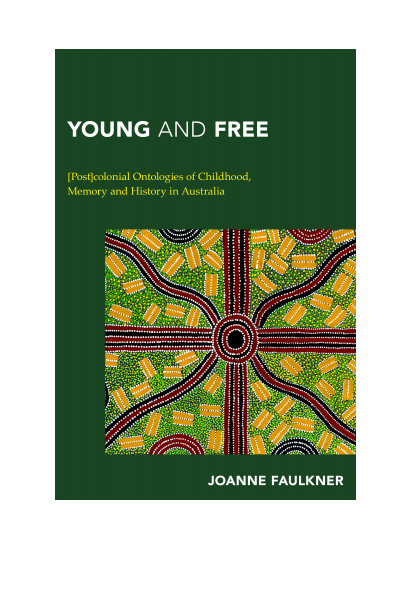
Young and Free
[Post]colonial Ontologies of Childhood, Memory and History in Australia
Authors:
Publisher:
2016
Summary
Tracing the complex yet intimate relationship between a present-day national obsession with childhood and a colonial past with which Australia as a nation has not adequately come to terms, Young and Free draws on philosophy, literature, film and testimony. The result is a demonstration of how anxiety about childhood has become a screen for more fundamental and intractable issues that vex Australian social and political life. Joanne Faulkner argues that by interpreting these anxieties in their relation to settler-colonial Australia’s unresolved conflict with Aboriginal people, new ways of conceiving of Australian community may be opened.
The book engages with philosophical and literary characterizations of childhood, from Locke and Rousseau, to Freud, Bergson, Benjamin Agamben, Lacan, Rancière and Halbwachs. The author’s psychoanalytic approach is supplemented by an engagement with contemporary political philosophy that informs Faulkner’s critique of the concepts of the subject, sovereignty and knowledge, resulting in a speculative postcolonial model of the subject.