, to see if you have full access to this publication.
Edited Book No access
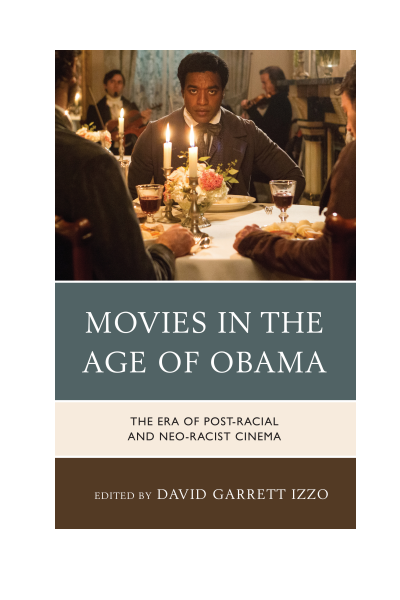
Movies in the Age of Obama
The Era of Post-Racial and Neo-Racist Cinema
Editors:
Publisher:
2014
Summary
The historic election of Barack Obama to the presidency of the United States had a significant impact on both America and the world at large. By voting an African American into the highest office, those who elected Obama did not necessarily look past race, but rather didn’t let race prevent them for casting their ballots in his favor. In addition to reflecting the changing political climate, Obama’s presidency also spurred a cultural shift, notably in music, television, and film.
In Movies in the Age of Obama: The Era of Post-Racial and Neo-Racist Cinema, David Garrett Izzo presents a varied collection of essays that examine films produced since the 2008 election. The contributors to these essays comment on a number of films in which race and “otherness” are pivotal elements. In addition to discussing such films as Beasts of the Southern Wild, Black Dynamite, The Blind Side, The Butler, Django Unchained, The Help, and Invictus, this collection also includes essays that probe racial elements in The Great Gatsby, The Hunger Games, and The Mist. The volume concludes with several essays that examine the 2013 Academy Award winner for best picture, 12 Years a Slave.
Though Obama’s election may have been the main impetus for a resurgence of black films, this development is a bit more complicated. Moviemakers have long responded to the changing times, so it is inevitable that the Obama presidency would spark an increase in films that comment, either subtly or overtly, on the current cultural climate. By looking at the issue these films address, Movies in the Age of Obama will be of value to film scholars, of course, but also to those interested in other disciplines, including history, politics, and cultural studies.
Search publication
Bibliographic data
Edition
1/2014
Copyright Year
2014
ISBN-Print
978-0-8108-9534-8
ISBN-Online
978-1-4422-4130-5
Publisher
Rowman & Littlefield, Lanham
Language
English
Pages
301
Product Type
Edited Book
Table of contents
ChapterPages
Contents No access
Introduction No access
1 “I Really Need a Maid!” White Womanhood in The Help No access
2 Gwendolyn Brooks’s Bronzeville and Tate Taylor’s Jackson: “Art hurts. Art urges voyages—and it is easier to stay at home.” No access
3 If Django and Lincoln Could Talk: James Baldwin Goes to the Movies No access
4 The Exceptional N*gger: Redefining African American Identity in Django Unchained No access
5 Blaxploitation in the Age of Obama: Black Dynamite, Django Unchained, Racial Reasoning, and Racial Capitalism No access
6 Between The Butler and Black Dynamite: Servility, Militancy, and the Meaning of Blaxploitation No access
7 Rednecks, Racism, and Religion: King and Darabont’s Precarious Prophecy of Obama’s Coming No access
8 “I Am Trayvon Martin”: Obama and the Black Male in Cinema No access
9 Invictus: South Africa as a Post-racial Fantasy in the Age of Obama No access
10 “Mama, I Think I Broke Something”: Thinking about the Environment in Benh Zeitlin’s Beasts of the Southern Wild No access
11 It’s Not a Wonderful Life: The Financial Crisis on Film and the Limits of Hollywood Liberalism No access
12 Reimagining Barack Obama as Jay Gatsby in Baz Luhrmann’s Film Adaptation of The Great Gatsby No access
13 The Hunger Games, Race, and Social Class in Obama’s America No access
14 Rise of the Planet of the People: Contradictions and Revolution in Rise of the Planet of the Apes No access
15 “Under the Floorboards of This Nation”: Trauma, Representation, and the Stain of History in 12 Years a Slave No access
16 162 Years after 12 Years a Slave: A Viewing through Double-Consciousness No access
17 Revoking the Privilege of Forgetting: White Supremacy Interrogated in 12 Years a Slave No access
18 No, You Can’t: Passive Protagonists in The Blind Side, Django Unchained, and 12 Years a Slave No access
Index No access Pages 291 - 296
About the Editor and Contributors No access Pages 297 - 301
Similar publications
from the topics "Medienwissenschaft, Kommunikationsforschung"