, to see if you have full access to this publication.
Monograph No access
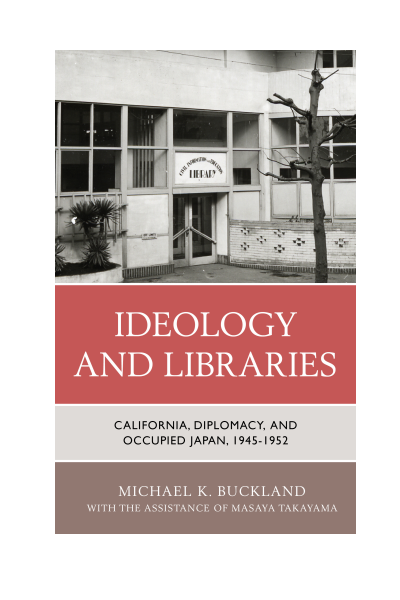
Ideology and Libraries
California, Diplomacy, and Occupied Japan, 1945–1952
Authors:
Publisher:
2020
Summary
In 1950 Robert L. Gitler went to Japan to found the first college-level school of library science in that country. His mission, an improbable success, was documented in an assisted autobiography as Robert Gitler and the Japan Library School (Scarecrow Press, 1999). Subsequent research into initiatives to improve library services during the Allied occupation has revealed surprising discoveries and human interest of the lives of very diverse individuals.
A central role was played by a librarian, Philip Keeney, who later became well-known as an alleged communist spy. A national plan, designed for Japan’s libraries, was based directly on the county library system developed by progressive thinkers in California, itself a dramatic story. The School of Librarianship at the University of California and its founding director, Sydney Mitchell, was found to have deeply influenced key figures. The story also requires an appreciation of the deployment of American libraries abroad as tools of foreign policy, as cultural diplomacy. Meanwhile, library services in Japan were seriously underdeveloped, despite Japan’s extraordinarily high literacy rate, very well-developed publishing and book retail industries, and librarians who were far from backward.
The difference in library development lay in the huge divergence between the ethos of the American public library (dominated by support for individual self-development and Western liberal democracy) and the evolving political ideology of Japanese governments after the Meiji Restoration (1868). After absorbing authoritarian French and German administrative practices Japan became a militarist dictatorship from the 1920s onwards until surrender in 1945.
The literature on the Allied Occupation of Japan is vast, but library services have received very little attention beyond the creation of the National Diet Library in 1948. The story of initiatives to improve library services in occupied Japan, the role of libraries as cultural diplomacy, the dramatic development of free public library services in California have remained unknown or little known – until now.
Search publication
Bibliographic data
Edition
1/2020
Copyright Year
2020
ISBN-Print
978-1-5381-4314-8
ISBN-Online
978-1-5381-4315-5
Publisher
Rowman & Littlefield, Lanham
Language
English
Pages
170
Product Type
Monograph
Table of contents
ChapterPages
Contents No access
Illustrations No access
Preface No access
Acknowledgments No access
1 Introduction No access Pages 1 - 2
2 Function and Form No access Pages 3 - 12
3 Cultural Contexts and Political Choices No access Pages 13 - 22
4 The California County Library System No access Pages 23 - 34
5 Libraries in Cultural Diplomacy No access Pages 35 - 40
6 Libraries in Japan and the Allied Occupation No access Pages 41 - 50
7 CIE Information Centers No access Pages 51 - 60
8 The Education Mission, 1946 No access Pages 61 - 66
9 Keeney and His Plan No access Pages 67 - 76
10 The National Diet Library No access Pages 77 - 88
11 The Library Law of 1950 No access Pages 89 - 96
12 Don Brown’s Initiative No access Pages 97 - 104
13 Gitler, Kiyooka, and Keio No access Pages 105 - 116
14 The Japan Library School No access Pages 117 - 132
15 Afterwards No access Pages 133 - 140
16 Summary and Retrospective No access Pages 141 - 150