, to see if you have full access to this publication.
Monograph No access
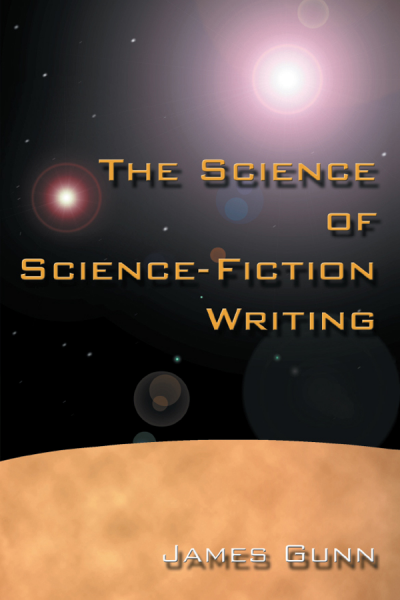
The Science of Science Fiction Writing
Authors:
Publisher:
2000
Summary
Written by one of the leading authorities on writing, publishing and teaching science fiction, The Science of Science Fiction Writing offers the opportunity to share in the knowledge James Gunn has acquired over the past forty years. He reflects on the fiction-writing process and how to teach it, and the ideas he has shared with his students about how to do it effectively and how to get it published afterwards.
The first section discusses why people read fiction, the parts of the short story, the strategy of the science fiction author, scene as the smallest dramatic unit, how to speak well in print, suspense in fiction, how to say the right thing, and how to give constructive criticism. The second section takes a more philosophical approach. Here, Gunn elaborates on the origins of science fiction, its definition, the worldview of science fiction, and the characters that appear in science fiction novels. The third section highlights well-known sci-fi authors: H.G. Wells, Robert A. Heinlein, Isaac Asimov, Henry Kuttner, C.L. Moore, and others, and the impact they have had on the development and progression of science fiction.
Search publication
Bibliographic data
Edition
1/2000
Copyright Year
2000
ISBN-Print
978-1-57886-011-1
ISBN-Online
978-1-4616-7358-3
Publisher
Rowman & Littlefield, Lanham
Language
English
Pages
233
Product Type
Monograph
Table of contents
ChapterPages
Table of Contents No access
Acknowledgments No access
Introduction No access
1: Why People Read Fiction No access
2: The Anatomy of a Short Story No access
3: Why a Formula is Not a Formula No access
4: The Author's Strategy No access
5: The Issue is Character No access
6: Scene-The Smallest Dramatic Unit No access
7: A Local Habitation and a Name No access
8: Speaking Well in Print No access
9: Suspense in Fiction No access
10: Getting the Words Right No access
11: How to Be a Good Critiquer and Still Remain Friends No access
12: The Origins of Science Fiction No access
13: Toward a Definition of Science Fiction No access
14: The Worldview of Science Fiction No access
15: Where Do you Get those Crazy Ideas? No access
16: Heroes, Heroines, Villains: The Characters in Science Fiction No access
17: H. G. Wells: The Man who Invented Tomorrow No access
18: Robert A. Heinlein: The Grand Master No access
19: Isaac Asimov: The Foundations of Science Fiction No access
20: Henry Kuttner, C. L. Moore, et al. No access
Appendix A: Notes from a Workshop No access Pages 201 - 216
Appendix B: Syllabus for a Workshop No access Pages 217 - 222