, to see if you have full access to this publication.
Monograph Partial access

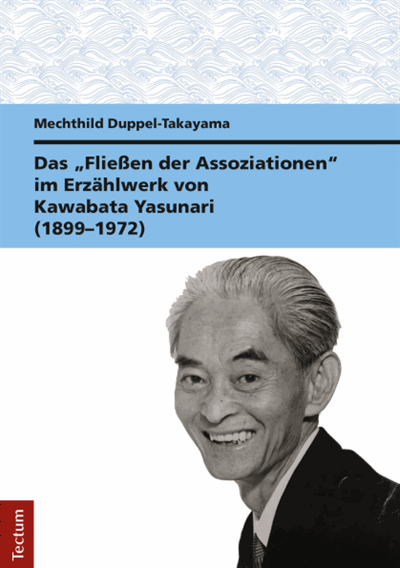
Das "Fließen der Assoziationen" im Erzählwerk von Kawabata Yasunari (1899-1972)

Authors:
Publisher:
 2017


Bibliographic data

Edition
1/2017
Copyright Year
2017
ISBN-Print
978-3-8288-3901-4
ISBN-Online
978-3-8288-6673-7
Publisher
Tectum, Baden-Baden
Language
German
Pages
270
Product Type
Monograph

Table of contents

ChapterPages
  1. Titelei/Inhaltsverzeichnis Partial access Pages 1 - 10
    1. I. Forschungsstand No access
    2. II. Zielsetzung und Vorgehensweise No access
      1. 1. monogatari 物語 No access
      2. 2. zuihitsu 随筆 No access
      3. 3. haiku 俳句 und renga 連歌 No access
    1. II. Die Prosaform shōsetsu 小説 No access
      1. 1. Kindheit (1899–1906) No access
      2. 2. Beziehung zu den Großeltern No access
      3. 3. Grund- und Mittelschulzeit (1906–1917) No access
      4. 4. Studienjahre in Tōkyō (1917–1924) No access
      5. 5. Mitglied der Gruppe Shinkankaku-ha 新感覚派 (1924–1927) No access
      6. 6. Etablierung als Schriftsteller (1927–1941) No access
      7. 7. Kriegsjahre und Nachkriegszeit (1941–1953) No access
      8. 8. Die letzten Jahre (1953–1972) No access
    1. II. Kawabatas Stellung innerhalb der japanischen Literatur No access
    2. III. Kawabata als Vertreter japanischer Literatur im Ausland No access
      1. 1. Erscheinungsweise – Entstehungsweise No access
      2. 2. Erzählverlauf No access
        1. a. Fabelanalyse: Die Zeitgestaltung No access
        2. b. Erzählsituation No access
          1. c. 1. Handlungstragende Motive No access
          2. c. 2. Strukturbildende Motive No access
      3. 4. Ergebnis der Analyse von Yukiguni No access
      1. 1. Erscheinungsweise – Entstehungsweise No access
      2. 2. Erzählverlauf No access
          1. a. 1. Übersicht No access
          2. a. 2. Zeitgestaltung der Einzelkapitel No access
        1. b. Erzählsituation No access
          1. c. 1. Handlungstragende Motive No access
            1. c. 2. 1. Das Hauptmotiv »Natur« No access
            2. c. 2. 2. Nebenmotive No access
        2. d. Träume No access
      3. 4. Ergebnis der Analyse von Yama no oto No access
      1. 1. Erscheinungsweise – Entstehungsweise No access
      2. 2. Erzählverlauf No access
      3. Exkurs: Übersetzung der Schlussteile des ursprünglichen Mizuumi-Textes No access
        1. a. Fabelanalyse: Die Zeitgestaltung No access
        2. b. Erzählsituation No access
          1. c. 1. Handlungstragende Motive No access
            1. c. 2. 1. Das Hauptmotiv »Verfolgung« No access
            2. c. 2. 2. Das Nebenmotiv »See« No access
            3. c. 2. 3. Weitere Nebenmotive No access
        3. d. Halluzinationen, Visionen und Träume No access
      4. 4. Ergebnis der Analyse von Mizuumi No access
  2. Teil 4. Resümee No access Pages 239 - 246
  3. Literaturverzeichnis No access Pages 247 - 266
  4. Anhang: Übersetzungen der analysierten Erzählungen No access Pages 267 - 270

Similar publications

from the topics "Kulturgeschichte & Kulturwissenschaft"
Cover of book: Literary and Cultural Disability Studies
Edited Book Full access
Klaus Birnstiel, Harriet Cooper, Johannes Görbert
Literary and Cultural Disability Studies
Cover of book: "The Confreres Should Behave Nobly Towards Members of a Foreign Nation..."
Edited Book No access
Darius J. Piwowarczyk, Zbigniew Wesolowski
"The Confreres Should Behave Nobly Towards Members of a Foreign Nation..."
Cover of book: Die dunkle Seite der Moderne
Monograph No access
Sophie Lauster
Die dunkle Seite der Moderne
Cover of book: Diccionario de la navegación del Siglo de Oro
Monograph No access
María Lourdes García-Macho Alonso de Santamaría, Antonina Saba Bianchi Bandinelli Paparoni
Diccionario de la navegación del Siglo de Oro
Cover of book: Dschingis Khan
Monograph No access
Albrecht Hagemann
Dschingis Khan