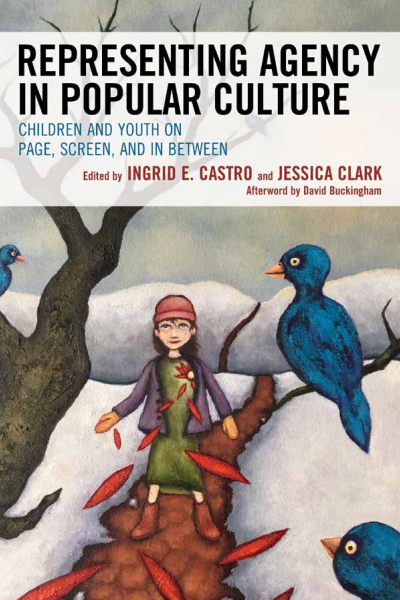
Representing Agency in Popular Culture
Children and Youth on Page, Screen, and In Between- Editors:
- |
- Publisher:
- 2018
Summary
Representing Agency in Popular Culture: Children and Youth on Page, Screen and In-Between addresses the intersection of children’s and youth’s agency and popular culture. As scholars in childhood studies and beyond seek to expand understandings of agency, power, and voice in children’s lives, this book places popular culture and representation as central to this endeavor. Core themes of family, gender, temporality, politics, education, technology, disability, conflict, identity, ethnicity, and friendship traverse across the chapters, framed through various film, television, literature, and virtual media sources. Here, childhood is considered far from homogeneous and the dominance of neoliberal models of agency is questioned by intersectional and intergenerational analyses. This book posits there is vast power in popular culture representations of children’s agency, and interrogation of these themes through interdisciplinary lenses is vital to furthering knowledge and understanding about children’s lives and within childhood studies.
Keywords
Search publication
Bibliographic data
- Edition
- 1/2018
- Copyright Year
- 2018
- ISBN-Print
- 978-1-4985-7494-5
- ISBN-Online
- 978-1-4985-7495-2
- Publisher
- Lexington, Lanham
- Language
- English
- Pages
- 300
- Product Type
- Edited Book
Table of contents
- Contents No access
- Acknowledgments No access
- Introduction No access
- Theorizing Children’s Agency Beyond “Analytical Dead Ends” and “Normative Short Circuits” No access
- Pop Culture Politics, Social Media, and Children’s Agency No access
- Children Against Trump: Earnest Adults and Children as Humanity’s Moral Compass No access
- Children Who Do Not Comply: “Bored Barron” and BBC 2’s 500 Words Competition No access
- Conclusion No access
- Notes No access
- References No access
- ‘71 (2014) No access
- Mickybo & Me (2004) No access
- Conclusion No access
- Notes No access
- References No access
- War Rhetoric and the Erasure of the Human No access
- The War Film Genre: Children in the Warzone No access
- Maimed and Orphaned Children—Horror and Humor in Turtles Can Fly (2004) No access
- Girls, Passing, and a Child Bride in Osama (2003) No access
- Conclusion No access
- Notes No access
- References No access
- Agency on the Nature/Culture Threshold No access
- Human and Animalic Agency No access
- Conclusion No access
- References No access
- Precepting the Girls’ College Series No access
- Homogeneity in the Girls’ College Series No access
- The Socioeconomics of Girls’ College Series Books No access
- Forestalling Marriage No access
- Notes No access
- References No access
- That was Then: Intimacy in Female Friendships No access
- This is Now: The End of Friendship No access
- Outside Forces: The Role of Others in Ending the Relationships No access
- The Aftermath: Falling Apart and Being Alone No access
- Transformation: Forming New Bonds and Finding Their Voices No access
- The End of Friendship and the Start of Something New: Concluding Thoughts No access
- Note No access
- References No access
- Award-Winning Young Adult Literature No access
- Agency, Disability, and Childhood No access
- Relational Agency and Disabled Young People: Biddy, Quincy, and Julia No access
- Relations of Care No access
- Conclusion No access
- Notes No access
- References No access
- Queer Theory as a Framework No access
- A Tandem Analysis Approach No access
- YA Novels Selected for Our Study No access
- Trans* Characters Enacting Agency No access
- The Role of Safe Spaces in the Journey Toward Agency No access
- Trans Realities: Final Thoughts No access
- Notes No access
- References No access
- Whale Rider No access
- Once Were Warriors No access
- Conclusion No access
- Notes No access
- References No access
- Conceptualizing Guai as a Social Model of Agency No access
- Reconstituting the “Authoritarian Father” and the “Filial Child” No access
- Redefining Friends as Family No access
- Negotiating the Limits of “Real Men” and “Good Women” No access
- Resisting Sacrifice and Obedience as Citizens No access
- Conclusion No access
- Notes No access
- References No access
- Gothic Films and Children’s Agency No access
- Conclusion No access
- Notes No access
- References No access
- Looking Back and Moving Forward No access
- Genderationing Children’s Agency No access
- Being (Intra)Independent: Care Work, People Work, Agency Work No access
- Final Thoughts: Children’s Japan and Beyond No access
- Notes No access
- References No access
- Afterword No access Pages 283 - 288
- Index No access Pages 289 - 294
- About the Contributors No access Pages 295 - 300