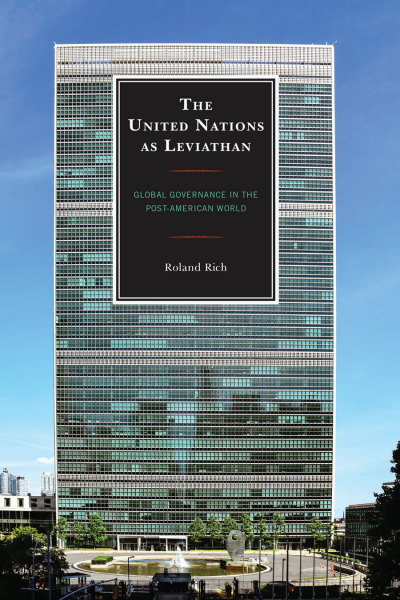
The world needs a UN 3.0. The extent and severity of global crises are such that business as usual provides no solution. Roland Rich’s Leviathan describes the necessary next version of the United Nations. It is a confident, competent, and independent organization that incorporates the world of business and global civil society as well as governments. It will certainly not have a monopoly on the use of force, but it will lead the international community through a mix of the principle of subsidiarity placing it at the apex, the application of the process of certification whereby thousands of entities are engaged in problem-solving, and the benefit of legitimacy earned through performance. The result will allow the UN to tackle the climate crisis, broaden the protection of democracy and human rights, govern globalization, and be better prepared for the next pandemic. Leviathan contains a vision but not a blueprint. Yet it does spell out how to achieve the first essential step – to clip the wings of the five permanent members of the UN Security Council.
This work is protected by copyright and may only be used in accordance with the provisions of the Terms of Use and License Agreement. Any use of the work beyond this is expressly prohibited and will be prosecuted.
We welcome your feedback on content and features. Your message helps us to continuously improve our service.