, to see if you have full access to this publication.
Monograph No access
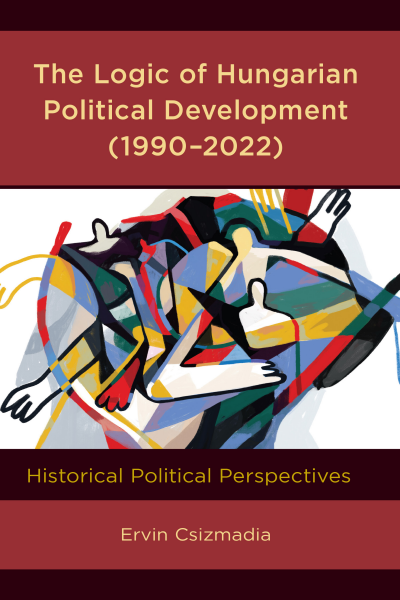
The Logic of Hungarian Political Development (1990–2022)
Historical Political Perspectives
Authors:
Publisher:
2024
Summary
The Logic of Hungarian Political Development, 1990-2022: Historical and Political Perspectives is a departure from most of the works focused on contemporary Hungarian politics. Most tend to focus on describing the transition from democracy to autocracy, with a focus on Viktor Orbán and the construction of an illiberal regime. Ervin Csizmadia's book differs from this literature in its approach. How it could have happened in Hungary in the first place. To understand the essence of this, you must recognize the whole process of Hungarian political development. Csizmadia argues that patterns of the old Hungarian development have emerged in our time., which cannot be dismissed as archaic; are reviving the old patterns today are intriguing and we know very little about them.
Keywords
Search publication
Bibliographic data
Edition
1/2024
Copyright Year
2024
ISBN-Print
978-1-6669-0692-9
ISBN-Online
978-1-6669-0693-6
Publisher
Lexington, Lanham
Language
English
Pages
238
Product Type
Monograph
Table of contents
ChapterPages
Acknowledgment No access
Notes No access
Thomas Kuhn, Paradigms, and Democracy No access
Scientists as Actors No access
Scientific Paradigms as Ideologies No access
Notes No access
Political Development No access
Transitology and Consolidology No access
The New Historicism No access
The Autocracy and Populism Theories No access
Notes No access
Thought, Organization, and Shaping Political Space No access
The Processual Nature of Democracy and the Open Outcome of Democratic Development No access
Notes No access
Model-Following Westernization: The Archetype No access
Challenging the Archetype: The Model-Shaping Image of Europe No access
The Left and the Right Concept of Europe No access
Notes No access
The Initial Theory and Perception of Democracy during the Transition No access
The Challenge of “Undemocratic Liberalism” No access
Orbán’s Understanding of Liberalism and Democracy No access
Notes No access
The Making of the Hungarian Party System and the Reasons for Its First Transformation No access
Further Transformation of the Party System No access
Notes No access
Model-Following and Model-Shaping in the Past No access
Adaptation of Peak Performance as “Faulty” Model-Following No access
Hungarian Independence as Stability No access
Notes No access
The Alliance with the Nation-State No access
The Alliance with Democracy No access
The Alliance with Globalization No access
Alliance with the Hungarian Nation-State No access
Alliance with Hungarian Democracy No access
Hungarian Liberalism and Globalization No access
Notes No access
The Dominant-Party Paradigm No access
The First Dominant-Party Regime (1867–1918) No access
The Second Dominant-Party Regime (1919–1944) No access
Notes No access
The Concept and Process of Political Development No access
The West: Political Development as Progress Toward Democratic Order No access
The Non-West-Specific Hungarian Political Development No access
Self-Transcending and Self-Perpetuating Structures and Mechanisms No access