, to see if you have full access to this publication.
Monograph No access
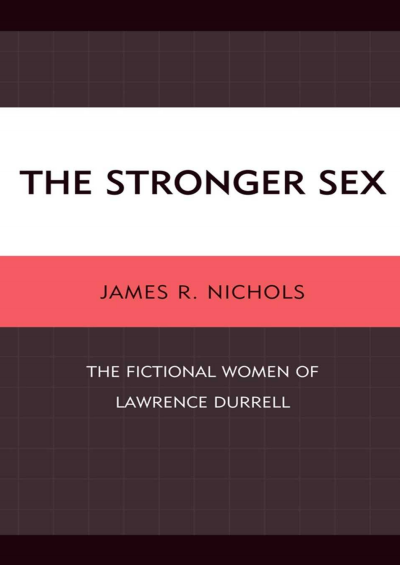
The Stronger Sex
The Fictional Women of Lawrence Durrell
Authors:
Publisher:
2011
Summary
The Stronger Sex, a study of the women in the fiction of Lawrence Durrell, argues that Lawrence Durrell envisioned a new woman, self-confident, free of male domination, and able to serve, direct, and protect her dependent man. Durrell's modern twentieth- /twenty-first-century woman is the center of what Durrell envisions as the new 'couple'-woman dependent upon man for completion and man dependent upon the centrality of woman for the essential wisdom and direction and meaning in his life. Far from being a mere follower of D. H. Lawrence, as many have claimed, Durrell came to insist that man must first cede to woman both the personal and social power and freedom which he has throughout history denied her. Only in this way, suggests Durrell, can modern man both find himself and save himself and so discover and fulfill his own being. Thus, all of Durrell's women are the saviors of the lost men who must come to them for human completion. From the women of the early works, such as Panic Spring, The Pied Piper of Lovers, The Black Book, and The Dark Labyrinth, to the Justines, Melissas and Cleas of the Alexandria Quartet, the Benedictas and Iolanthes of The Revolt of Aphrodite, the Constances and Livias of The Avignon Quintet, and Cunegonde of Caesar's Vast Ghost-all of Durrell's lost and ever inadequate men must ultimately find themselves and the meaning of their lives in the women who complete them. Then, paradoxically, and only then, can these same men provide the security, direction, and protection for which their women so desperately search. Thus, in the 'couple' both man and woman are completed in their mutual dependence and final self-discovery. The study refers often to the works of previous biographers of Lawrence Durrell: Ian MacNiven, Richard Pine, and Gordon Bowker. An Irishman and colonial born in India and sent by his parents to England for his initial schooling, Durrell's work very early on moved away from the simplistic, self-aggrandizing chauvinism of D. H. Lawrence in its discovery of the sacrificial and then guiding mother figure as central to man's ability to discover his world and himself. The work is of interest not only to students of Modern British Fiction but to those of Post Colonial Studies, Irish Literature, and to those interested in Feminist Criticism as well.
Search publication
Bibliographic data
Edition
1/2011
Copyright Year
2011
ISBN-Print
978-1-61147-066-6
ISBN-Online
978-1-61147-067-3
Publisher
Lexington, Lanham
Language
English
Pages
166
Product Type
Monograph
Table of contents
ChapterPages
Contents No access
1. Introduction: Biography and Fiction No access Pages 9 - 27
2. Classicism and Durrell's Vision: Durrell's Free Women No access Pages 28 - 44
3. Dorothy Lamour on the Road: Paganism and the Female Body No access Pages 45 - 57
4. The Loneliness of Love: Melissa and the Sacrificial Woman No access Pages 58 - 69
5. Durrell's Failed Women: Justine and Livia No access Pages 70 - 88
6. My Lady, My Guenevere: Benedicta and the Revolt of Aphrodite No access Pages 89 - 106
7. Risen Angels in Durrell's Free/Fallen Women: Clea, Constance, and the Fortunate Fall No access Pages 107 - 120
8. Jocasta, How Youve Changed: Lawrence Durrell and the Earth Mother No access Pages 121 - 132
9. Narcissism and the Female Body: Cunegonde in Caesar's Vast Ghost No access Pages 133 - 143
10. Postscript: Civilization as a Female Construct No access Pages 144 - 159